September 13, 2026 · KC Gold and Silver
Best Way to Sell Gold for Cash: A Step-by-Step Guide
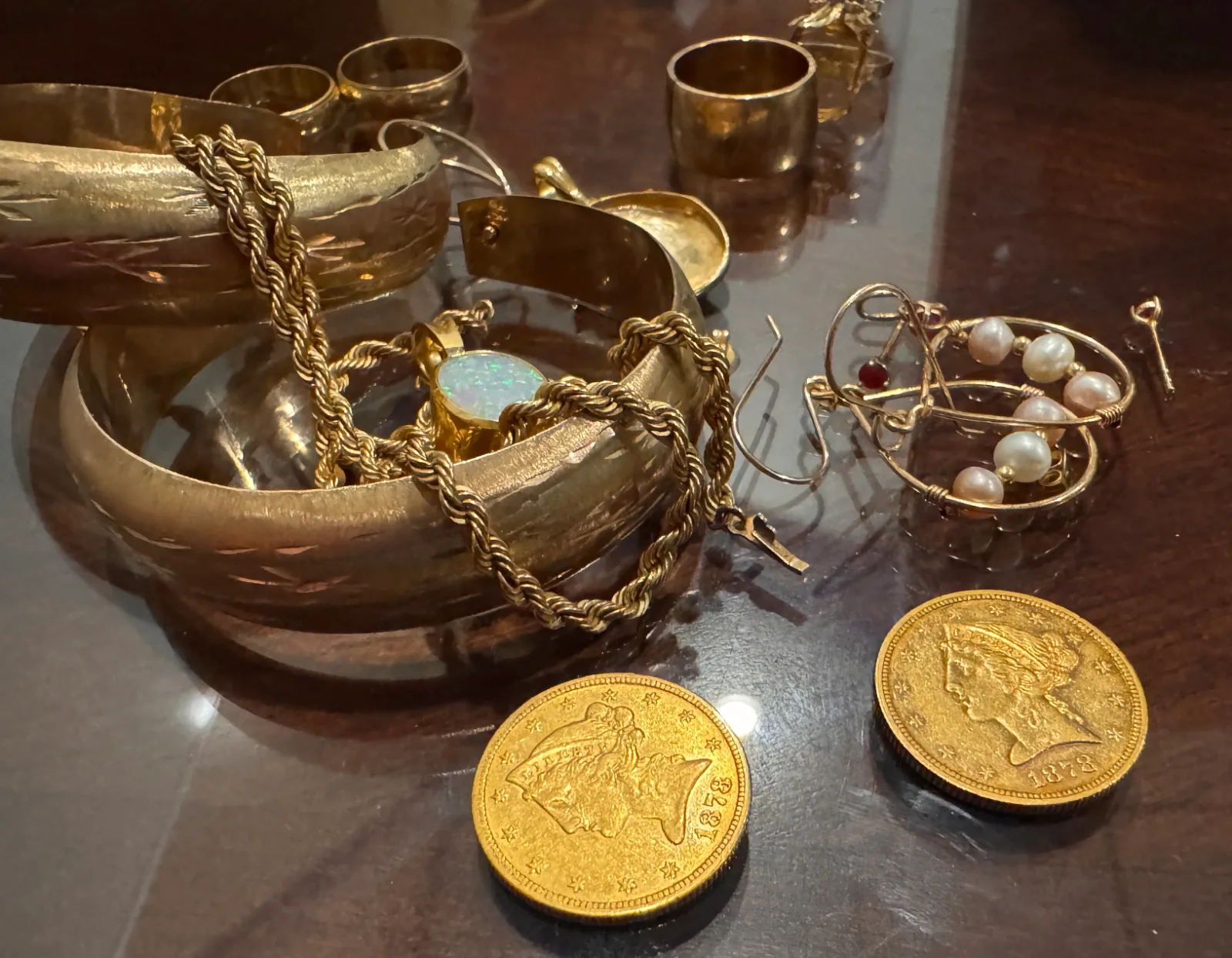
Most people who sell gold walk away with significantly less cash than their metal was actually worth. The reason usually isn't a scam. It's that they didn't know what to expect before they walked in the door, so they accepted the first number offered without any context for whether it was fair. This guide explains the best way to sell gold for cash so you know exactly what to expect before you contact a single buyer, how gold is valued, what different types of buyers actually pay, and which warning signs should send you somewhere else.
Kansas City sellers who visit transparent local buyers like KC Gold and Silver consistently leave with offers tied to live market prices and same-day cash. That approach sets the bar this guide measures everything else against. By the time you finish reading, you'll have a practical framework for getting the best payout on your gold jewelry, coins, bullion, or dental gold without guessing your way through the process.
What your gold is actually worth before you talk to any buyer
Before you walk into any buyer's door, you need one number: your gold's melt value. Melt value is what the actual metal content inside your item is worth at current market prices, stripped of any retail markup, craftsmanship premium, or sentimental value. It's your baseline, and every legitimate offer should be expressed as a percentage of it.
How karat purity determines your starting number
Karat is simply a measure of gold content out of 24 parts. Here's what that looks like in practice: 10K gold is 41.7% pure gold, 14K is 58.3% pure, 18K is 75% pure, and 24K is 99.9% pure. Most gold jewelry sold in the United States carries a hallmark stamped directly on the piece, 10K, 14K, or 18K are the most common, though you may also see numeric fineness marks like 417, 585, or 750, which represent the same purities in parts per thousand.
Purity is the single biggest driver of what a buyer will offer per gram. A 10K ring and an 18K ring of the same weight produce very different melt values, so knowing your karat before any conversation is non-negotiable. Check clasps, inner bands, and the back of pendants, stamps are easiest to find in those spots.
The melt value formula, with a real example
The formula is straightforward: weight in grams, multiplied by the purity fraction, multiplied by the current gold price per gram. With gold currently trading around $139.80 per gram, a 14K gold necklace weighing 10 grams would calculate like this: 10 grams × 0.583 (14K purity) × $139.80 = approximately $815 in melt value. That's the number a fair buyer is working from when they make your offer.
A legitimate buyer's offer will be a percentage of that figure, reflecting their operating costs and margin. Knowing your melt value before you walk in protects you from accepting a lowball number without realizing it. You don't need to expect full melt value as a payout, but you do need to know whether the offer in front of you is 85% of melt or 40% of melt. Those are very different outcomes.
Best way to sell gold for cash: where to sell and what each buyer actually pays
Not all buyers operate the same way, and the gap between the best and worst payout channels is wide enough to matter significantly on any meaningful amount of gold. Understanding your options before you commit is what separates sellers who get fair deals from those who settle for the first number they hear.
Pawn shops and local jewelers: what the low end looks like
Pawn shops typically pay somewhere between 30% and 60% of melt value, with most offers clustering around 40% to 50%. Local jewelers fare somewhat better, often landing in the 55% to 80% range, but their core business is retail sales, not metal buying, so pricing is inconsistent from one shop to the next. Neither channel is inherently dishonest. Their business models simply require a wider margin between what they pay and what they recover, and that margin comes directly out of your payout.
Local bullion dealers and online mail-in services
Local precious metals buyers and bullion dealers typically pay 75% to 95% of melt value for standard items because their overhead and business model are built around metal transactions, not retail resale. That structure allows them to pass a larger share of the melt value back to the seller. Online mail-in services often land in the 70% to 85% range, but they add shipping logistics, insurance requirements, and a window of time where you don't have your gold in hand and can't easily compare offers.
Auction platforms are a different category entirely. Seller commissions often run 10% to 25% of the final sale price, and time-to-payment can stretch 60 to 180 days after consignment. For sellers who want cash now, the local bullion dealer path is the most direct route to a competitive offer without the waiting and logistical complexity.
How the best local buyers calculate your offer
Understanding what a transparent buying process looks like protects you everywhere, not just at one specific shop. The clearest benchmark for what selling gold should feel like is a buyer who operates with complete visibility into pricing and testing.
Live spot prices as the pricing anchor
Reputable local buyers post the current gold, silver, and platinum spot price and use it as the real-time baseline for every offer. KC Gold and Silver displays live spot prices so sellers can see exactly what the market says their metal is worth before any number is put on the table. This eliminates the guessing game that makes selling gold feel risky, because the math is grounded in today's market rather than a fixed rate set weeks ago.
A buyer who won't show you the spot price they're working from is a buyer worth being cautious about. The price of gold moves daily, and any credible offer has to be anchored to where the market is right now.
In-person testing you watch from start to finish
At a transparent buyer, the evaluation process is visible from beginning to end. Items are weighed on a calibrated scale, purity is tested using acid testing or XRF (X-ray fluorescence) analysis in front of the customer, and the math connecting weight, purity, and spot price is explained openly. XRF testing is particularly useful because it reads the actual elemental composition of the metal in seconds without scratching or damaging the piece. KC Gold and Silver conducts all testing with the customer present, no back-room steps, no pressure to accept before you're ready.
Payment is made on the spot in cash for accepted items, with no waiting period and no hidden deductions after the fact. Sellers who visit after stopping at other shops are often surprised by how different a fully transparent process feels compared to being handed a number with no explanation attached.
Red flags that cost sellers money
Knowing what a fair process looks like is useful. Knowing what an unfair one looks like is equally important, because the warning signs are often subtle enough that sellers don't catch them until after they've accepted a bad offer.
Warning signs that should make you walk away
The clearest red flags share a common theme: opacity. Watch for offers that change after you hand over the metal, testing done out of your sight, pressure to decide before you've had time to think, and no explanation of how the offer was calculated. Additional warning signs include cash-only payment with no written receipt, no verifiable physical business address, and mail-in buyers with vague return or insurance policies. If a buyer won't walk you through the math from spot price to final offer, that's the most important reason to ask why.
Questions to ask before you agree to anything
A few direct questions separate transparent buyers from those counting on seller ignorance. Ask these before you commit:
-
How did you calculate this offer? Walk me through the math from spot price to final number.
-
Will you put this quote in writing before I decide?
-
Can I watch the weighing and testing process?
-
What happens if I decline the offer?
-
Are there any fees deducted after this quote?
-
How and when will I be paid?
A legitimate buyer answers every one of those questions without hesitation. The goal isn't to be confrontational; it's to confirm that you're dealing with someone whose process can withstand basic scrutiny.
Best way to sell gold for cash: your step-by-step checklist
Preparation is what separates sellers who get fair offers from sellers who get whatever the buyer feels like offering that day. The steps below take less than an hour at home and significantly change how a selling appointment goes.
Before you leave the house
Start by noting any karat stamps or hallmarks on each item. If you have a kitchen scale, weigh your pieces and write down the approximate weight in grams; even a rough figure gives you useful context. Look up the current gold spot price per gram so you have a reference number before any buyer quotes you a price. Contact two or three buyers to get a sense of the range before you commit to any one place, and include at least one local precious metals dealer in that comparison.
KC Gold and Silver offers appointment booking, which eliminates wait time and lets the buyer prepare for your specific items in advance. That small step makes the whole visit more efficient, especially if you're bringing a mixed collection of pieces.
At the appointment: what to do and what to expect
Watch the scale and the testing process actively. Ask what testing method they're using and what the result means in plain terms. When the offer comes, compare it against the melt value estimate you calculated at home and assess whether it represents a fair percentage of that number. Don't feel pressured to decide on the spot. A legitimate buyer is entirely comfortable with a seller who takes a few minutes to think before accepting.
If the offer is within a fair percentage of melt value and the buyer has been transparent throughout, accept with confidence and walk out with cash in hand.
What to bring and what to expect on the paperwork side
The administrative side of selling gold is simpler than most sellers expect, but knowing what to anticipate removes the last source of uncertainty before your appointment.
ID and reporting basics
Most buyers require a government-issued photo ID as standard practice. For cash transactions over $10,000, federal law requires the buyer to file IRS Form 8300, which means they'll collect your name, address, and tax identification number for that paperwork. This is routine compliance, not a cause for concern. Missouri requires precious metals dealers to maintain a transaction record that includes a copy of your photo ID, your signature, and a description of the items, with each purchased item held in unaltered condition for ten business days. Because Kansas requirements are largely governed at the municipal level rather than by a single statewide statute, it's worth asking your specific buyer what documentation they need before your appointment.
Tax basics sellers often overlook
If you sell gold for more than you originally paid for it, the gain is generally taxable and may qualify as a capital gain. Most everyday jewelry sellers don't have a purchase receipt for inherited or gifted items, which complicates the basis calculation. The practical advice is straightforward: keep your sale receipt, note the date and amount received, and consult a tax professional if the transaction amount is significant. Reporting any taxable gain is a seller-side responsibility, not something the buyer manages on your behalf.
Selling gold for cash doesn't have to feel uncertain
When you know your metal's melt value, understand how buyer types differ in what they pay, and walk in with a short list of questions ready, you're in control of the transaction instead of guessing your way through it. The math is accessible, the red flags are recognizable, and the preparation takes less time than most people assume.
If you've been searching for the best way to sell gold for cash near me, the answer comes down to finding a local buyer who shows you live spot prices, tests your items in front of you, and pays cash on the spot without games or delays. For Kansas City area sellers, KC Gold and Silver operates exactly that way. Stop in or book an appointment to get a free, no-obligation evaluation on your gold jewelry, coins, bullion, and more. No pressure, no hidden fees, just a straightforward offer based on what your metal is worth today. Following these steps is the best way to sell gold for cash and walk away knowing you got a fair deal.
Frequently asked questions
What is the best way to sell gold for cash quickly?
Visiting a local precious metals dealer is typically the fastest route. You get an in-person evaluation, a same-day offer, and cash on the spot, no shipping delays, no waiting on auction payouts.
How do I know if a buyer's offer is fair?
Calculate your item's melt value at home using the formula above, then compare the buyer's offer as a percentage of that number. Reputable dealers generally pay 75% to 95% of melt value. Any offer below 60% deserves a second opinion.
Do I need an appointment to sell gold at KC Gold and Silver?
Appointments are available and recommended, they eliminate wait time and let the buyer prepare for your specific items. Walk-ins are welcome as well.
Will selling gold affect my taxes?
It can. If you sell for more than your original cost basis, the profit is generally taxable. Keep your sale receipt and consult a tax professional if the amount is significant.
Keep reading
September 12, 2026
Gold spot price at record highs: what sellers should know
When the gold spot price hit a record high of $5,589.38 per troy ounce on January 28, 2026, seasoned dealers stopped mid-sentence. That was the highest…
Read more →
September 1, 2026
How to Sell Inherited Jewelry in Kansas City for Fair Value
If you need to sell inherited jewelry in Kansas City, this guide gives you a clear, respectful path through the process. Inherited jewelry almost always…
Read more →
Find out what yours is worth
Bring it by our Lenexa shop for a free, no-pressure evaluation. We test and weigh in front of you, explain the math, and pay on the spot if you accept.