October 25, 2026 · KC Gold and Silver
Inherited Gold Jewelry: Pawn Shop or Gold Dealer?
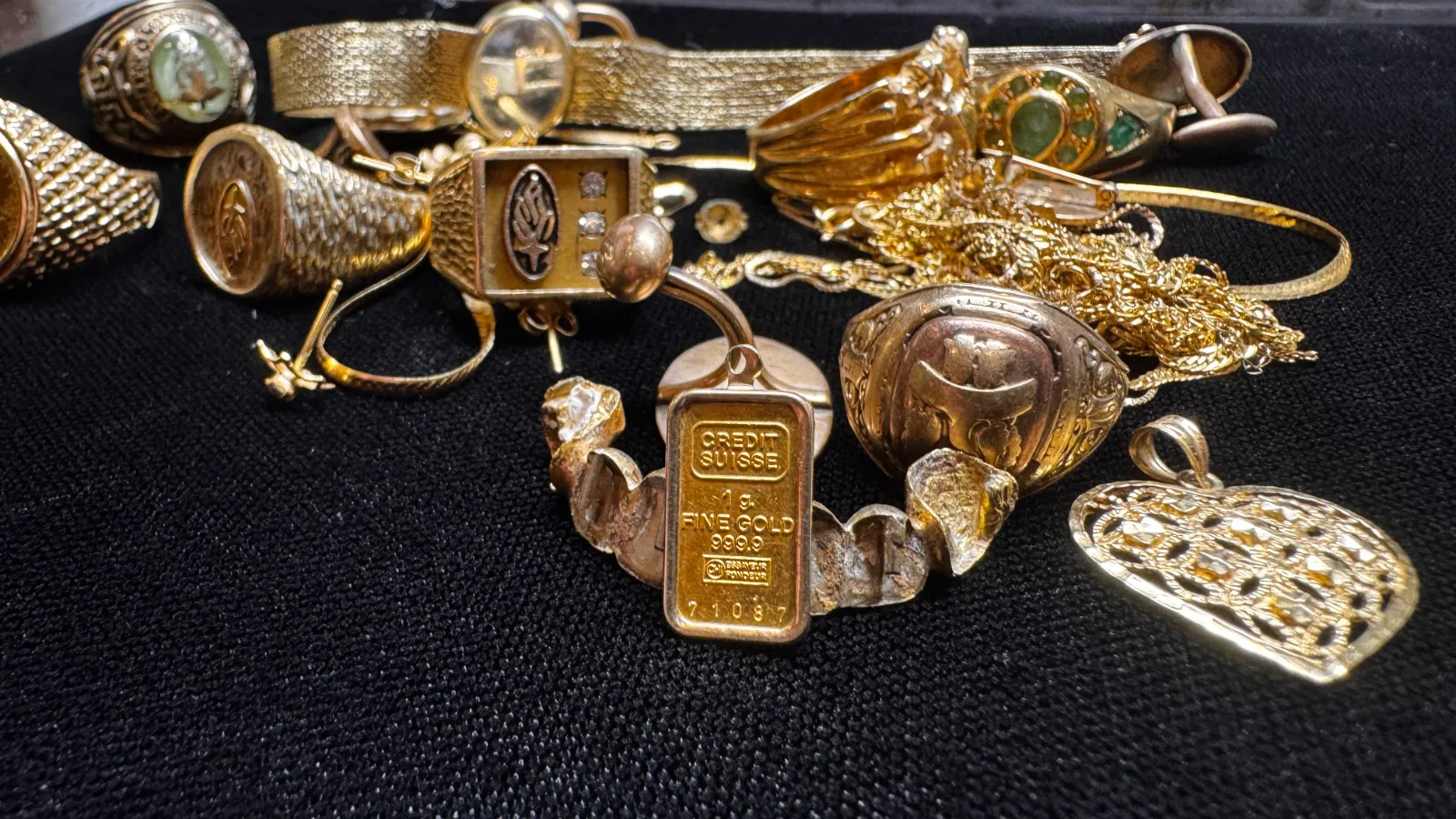
Maybe it is a box on a dresser. Maybe it is a velvet pouch from a drawer nobody had opened in years: your grandmother's rings, a chain from your grandfather's jewelry box, a few brooches nobody wore but nobody could part with. Now you are ready to sell, and the question is a fair one. Should inherited gold jewelry go to a pawn shop or to a gold dealer?
Instead of arguing it in the abstract, this article walks through what each counter is actually like, from the front door to the moment you are handed cash. Once you can picture both, the choice usually makes itself.
For most inherited gold jewelry, a dedicated gold dealer such as KC Gold and Silver is the better place to sell, because gold is the whole business and every piece is tested and weighed in front of you.
Two different businesses behind two different counters
A pawn shop is a general business. It lends money against guitars, power tools, electronics, and jewelry, and it also buys things outright. Gold is one shelf among many. That is not a criticism, it is simply how the business is built. One thing worth knowing is that a pawn loan is not a sale. You get cash now, and if you do not repay the loan on time, the shop keeps the piece. For a family heirloom, be sure which of the two you are agreeing to.
A gold dealer buys gold and silver, and that is the day job. The people at the counter look at karat stamps, test metal, and handle estate jewelry all week. That matters more than it sounds when the box in front of you holds a dozen pieces with different stamps, some worn smooth.
Before you leave the house with inherited gold jewelry
A few minutes of prep makes the visit smoother anywhere you go.
- Bring everything. Broken chains, single earrings, bent rings, and dental gold all count. Do not sort out the "good" pieces in advance.
- Skip the polishing. Condition, tarnish, and tangles do not change what the metal is. You are not trying to make it presentable.
- Look for stamps. Check inside rings, on clasps, and behind pendants. If you find nothing, bring the piece anyway. Unmarked does not mean not gold.
- Bring a valid photo ID. Any legitimate buyer will ask for it.
- Think about who is selling. If the estate is still in probate, sort out who has the authority to sell before you go. A probate attorney or the court can tell you. A sale by someone without that authority can be challenged later.
At a pawn shop counter
You hand the jewelry over, the clerk checks the stamp, weighs it, and names a figure. It is quick, and quick is the main appeal. Because the shop handles so many kinds of goods, the explanation behind that figure can be short, and the assessment is sometimes done at the back or out of your direct view. If you came in needing cash fast, that may be all you want. If you are trying to understand what your grandmother's ring is made of, you may leave knowing less than you hoped.
Small accent stones and design details also tend to get less attention at a general counter. That is the nature of a generalist, not a character flaw.
At a gold dealer's counter in Lenexa
At KC Gold and Silver, the visit goes like this. You walk in with your box or bag. Your pieces are tested and weighed in front of you, so you see the scale and see what the metal turns out to be. The spot price is the going market rate for raw gold and it moves all day; our spot price article explains why nobody sells exactly at it and why that is normal. Then we explain our offer in plain words. It is a free evaluation with no pressure, and you are under no obligation to sell. If you say yes, it is same-day cash.
A small batch usually takes a short visit. A full estate box with many pieces takes longer, simply because each item gets looked at properly. If you have a large collection, our page on selling estate jewelry covers what to expect.
When a piece may be worth more than its metal
Most inherited gold jewelry is worth what the gold is worth. But some pieces carry more: antique work, signed designer pieces, or jewelry with significant gemstones. A buyer who works mainly with metal, whether a pawn shop or a dealer like us, is looking at the gold. If you suspect a piece has collector or gemstone value, an independent appraiser with estate jewelry credentials is worth a visit before you sell it anywhere. Choose one who will not profit from what you do with the piece afterward.
Auction and consignment are also real options for rare pieces. They take time, usually weeks or months, and the seller pays fees. For ordinary gold chains, rings, and bracelets, that wait rarely makes sense.
A word on taxes
Inherited property is generally treated differently for tax purposes than something you bought yourself, and the starting value is usually tied to the date of the original owner's death. A date-of-death appraisal can document that. We are a gold buyer, not tax advisors, so please ask a tax preparer about your own situation and keep your paperwork and receipt.
So which counter fits?
A pawn shop can make sense if you need money today, the piece is minor, and you want the simplest possible transaction. For inherited gold jewelry with real weight or real family history, a dealer is usually the better fit, because you can watch the testing, ask anything, and walk out without having committed to a thing.
Call us at (913) 565-4653, which is also (913) 565-GOLD, or visit kcgoldandsilver.com. If you would like background first, we also have a guide on how to sell inherited jewelry and a post on selling inherited jewelry in Kansas City.
Before you drive over: common questions
Should I sell inherited gold jewelry to a pawn shop or a gold dealer?
For most people a gold dealer is the better choice, because the testing is done in front of you and gold is the entire business. A pawn shop can suit someone who needs a loan or immediate cash on a small item. Just be clear on whether a pawn shop is buying the piece or lending against it.
Does KC Gold and Silver charge for an evaluation?
No. The evaluation at our Lenexa shop is free, there is no pressure, and you do not have to sell. Your pieces are tested and weighed in front of you.
What should I bring when I sell inherited gold jewelry?
Bring all of it, including broken and tangled pieces, plus a valid photo ID. If the estate is in probate, also bring whatever paperwork shows who may sell. You do not need to clean anything.
Can I sell if the estate is still in probate?
That depends on who has legal authority to sell estate property. Check with a probate attorney or the court first, because a sale by someone without that authority can be questioned later.
How long does a visit to KC Gold and Silver take?
A small handful of pieces is usually quick. A full box takes longer because every item is checked. If you receive an offer you accept, you leave with same-day cash.
How do I reach KC Gold and Silver before I make the drive to Lenexa?
Call (913) 565-4653, which is also (913) 565-GOLD, or visit kcgoldandsilver.com. We are happy to tell you what to bring before you come.
Keep reading
October 26, 2026
Local Gold Buyer or Mail-In Service: The Real Difference
Selling a parent's gold jewelry as a family? See how a local gold buyer compares with a mail-in service when several people have to agree.
Read more →
October 24, 2026
How to Sell Gold Jewelry Fast and Get Top Dollar
Learn how to sell gold jewelry for the most cash. Understand karat values, melt price, and which buyer pays best. Local and online options compared.
Read more →
Find out what yours is worth
Bring it by our Lenexa shop for a free, no-pressure evaluation. We test and weigh in front of you, explain the math, and pay on the spot if you accept.