October 3, 2026 · KC Gold and Silver
Best Time to Sell Gold: How to Know When Prices Are Right
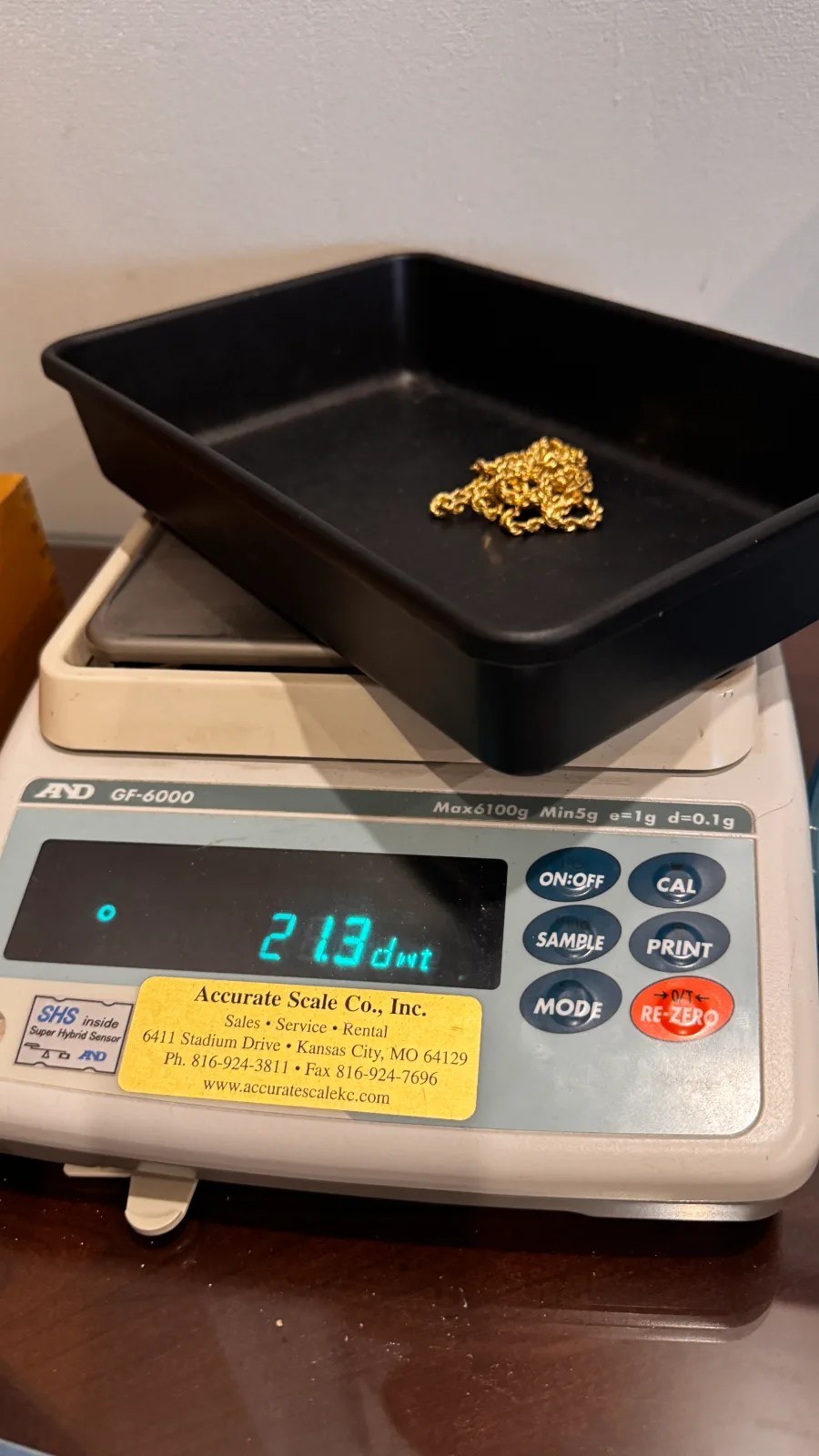
Many sellers are asking whether right now is the best time to sell gold, and with prices sitting near $4,350 per troy ounce, up roughly 20% from a year ago, that question is hard to ignore. Sellers across the Kansas City area are paying attention, and the question coming across the counter at KC Gold and Silver these days is almost always the same: is this the moment to act? Knowing gold is high is only half the equation. The other half is understanding what drove it here, how to read whether that strength will hold, and what to do the minute you decide to move. This article walks through all three.
The difference between a good outcome and a great one often comes down to timing and venue. Sellers who understand what drives the price, how to spot a favorable window, and which buyer's door to walk through tend to leave with significantly more cash than those who simply show up hoping for the best.
The four forces that drive gold prices up or down
Gold doesn't move randomly. Four macro variables explain the vast majority of price swings, and once you understand them, you can follow the market with genuine clarity instead of watching headlines in confusion.
How inflation and real interest rates shape gold's value
Real interest rates, nominal rates minus inflation, are the single most-watched variable among gold analysts. When real rates fall below zero, cash and bonds lose purchasing power over time, making gold more competitive as a store of value. When the Federal Reserve raises rates and real yields turn decisively positive, gold faces headwinds because investors can earn a real return just by holding Treasury bonds. As of September 2026, the 10-year TIPS real yield sits around 2.55%, up sharply from roughly 1.67% a year ago. That's a meaningful headwind, yet gold has climbed anyway, which tells you the other forces on this list have been unusually powerful.
Why a weaker U.S. dollar tends to lift gold prices
Gold is priced in dollars globally, so when the Dollar Index (DXY) falls, gold becomes cheaper for international buyers, demand rises, and the price follows. The inverse is equally true: a surging dollar makes gold more expensive for everyone outside the U.S., which compresses prices. The DXY is sitting near 99 right now, down modestly over the past month and well below its 52-week high near 101.80. That softer dollar has contributed to gold's resilience this year, and sellers should track DXY alongside spot gold rather than ignoring it.
Geopolitical tension and the safe-haven effect
Wars, trade conflicts, and political instability push money into gold because gold holds value when everything else feels uncertain. In 2026, several overlapping pressures have driven safe-haven demand: escalating U.S. tariff policy, Middle East conflict risk, questions about Federal Reserve independence, and structural central bank reserve buying tied to a broader de-dollarization trend. That combination of simultaneous pressures explains why gold has held its gains despite rising real yields, which would ordinarily be enough to push the price lower on their own.
When Is the Best Time to Sell Gold: Recognizing a Favorable Selling Window
Understanding why prices move is the theory. Knowing when to act is the practice. Three signals help translate macro knowledge into a concrete decision about the best time to sell gold.
Reading the spot price trend: what year-over-year gains tell you
A 12-month gain of roughly 19, 20% in spot gold, where the market stands in September 2026, is well above the long-run historical average. Sellers who have held gold jewelry, coins, or bullion for several years are sitting on real, meaningful appreciation. The right comparison isn't last week's price versus today's; it's the price you paid or inherited against what the market will give you right now. Weekly dips of 1, 2% are normal noise inside an uptrend; a year-over-year gain of nearly 20% is not.
Market signals worth tracking
The 50-day and 200-day moving averages tell you whether gold is in a sustained trend or losing momentum. When price trades well above both, conditions historically favor sellers who want to capture gains. The gold/silver ratio is another useful reference: currently sitting around 66, 67, it's above the long-run average near 60, which suggests gold is relatively expensive compared to silver. That's not a precise sell trigger, but it confirms you're not selling at a historically cheap level relative to other metals. Combine both signals, and they point in the same direction.
Personal triggers that matter just as much as the market
Market conditions tell you whether the environment is favorable. Your personal situation tells you whether to act on it. A price environment like this one is objectively strong, but sellers who wait for a theoretically perfect peak often miss a window that was already excellent. If you have unused jewelry in a drawer, inherited flatware sitting in storage, or bullion you bought years ago as an investment, a 20% year-over-year market gain combined with personal readiness is a more actionable combination than any chart.
Best Time to Sell Gold, What You're Selling Changes the Math
The same strong gold market affects different items in very different ways. Understanding that distinction sets realistic expectations before you walk in the door.
Gold jewelry: purity and weight are everything
A 10K ring contains about 41.7% pure gold. An 18K piece contains 75%. The cash offer you receive scales directly with actual gold content, not with how the piece looks. Before visiting any buyer, check for a karat stamp, usually found on the inside of a ring band or on a clasp. That stamp is what sets your baseline. Broken chains, mismatched earrings, and old dental crowns all count; the metal inside is real regardless of the condition of the piece around it.
Bullion bars and coins: closest to live spot
Investment-grade bullion, including gold Eagles, Maple Leafs, and Krugerrands, is priced tightest to the daily spot price because buyers can resell it quickly without refining. For bullion sellers, the timing argument is most direct: a high spot price today translates almost dollar-for-dollar into a higher cash offer today. Coin collectors should note one distinction: common bullion coins are priced on metal content, while rare coins carry a numismatic premium that moves on collector demand rather than spot price alone.
Why the type of item affects where you should sell
Pawnshops are retail stores first. Their gold offers are structured around counter resale and overhead recovery, which is why sellers typically receive 40, 60% of melt value for jewelry. A specialized precious metals buyer evaluates items against live spot and works on a much tighter spread, especially for bullion and higher-karat jewelry. Selling the right item to the wrong buyer is one of the most common and most avoidable mistakes in this process.
Where you sell determines how much of that price you actually keep
You can time the market perfectly and still leave money on the table by choosing the wrong venue. Buyer type matters more than most sellers expect.
What pawnshops and mail-in services actually pay
Pawnshops price gold for quick retail resale and overhead recovery, which means their buyback spreads are the widest in the market. Sellers routinely receive 40, 60% of melt value, sometimes less on jewelry with stones. Mail-in gold services add a different set of problems: shipping risk, a multi-day delay between sending your items and receiving an offer, and often a time-limited acceptance window that pressures you into accepting a low number quickly. Neither option gives you the benefit of watching the live spot price while your items are actually being evaluated.
Why a local precious metals buyer closes the gap
At KC Gold and Silver, every offer is calculated directly from the live spot price at the moment of the transaction. Sellers see the same number the buyer sees, displayed in real time during the evaluation. Items are weighed and tested in front of you using professional equipment, so purity and weight are never a mystery. Immediate cash payment means you capture the price on the day you visit, not days later when the market may have shifted.
The transparency advantage: no fees, no surprises
There are no evaluation fees and no obligation to sell. If the offer doesn't meet your expectations, you walk out with your items and nothing owed. Appointment booking is available for sellers who prefer a streamlined visit. For Kansas City area sellers who've decided the timing is right, this structure removes the last friction point between you and a fair, market-based payout.
A simple pre-visit checklist to maximize your payout
A little preparation before your visit pays off. Sellers who arrive organized move through the evaluation faster and tend to ask sharper questions when the offer is made.
Gather and organize your items before the appointment
Separate items by metal type and by form, gold, silver, and platinum in one grouping; jewelry, coins, and bullion sorted from there. A few minutes of sorting makes the evaluation more efficient and ensures nothing is overlooked. Note any karat stamps, hallmarks, or mint markings you can identify before you arrive; this sets realistic expectations going in. For coin collections, keep original holders or packaging intact when possible, especially for collectible coins where condition and documentation can affect value meaningfully.
Know the spot price on the day you visit
Check the live gold spot price before you leave the house. Free bullion tracking resources update in real time and take about 30 seconds to check. KC Gold and Silver displays live spot prices during every evaluation, so you can confirm on the spot that the offer reflects the actual market, not a generic discounted rate. Even a basic understanding of how spot price and karat purity connect gives you the confidence to evaluate what you're being offered and ask informed questions if something doesn't add up.
The window is open, here's your next step
The best time to sell gold is when market conditions are favorable and your personal situation calls for action. Right now, with gold up nearly 20% year over year, driven by geopolitical pressure, a softer dollar, and persistent safe-haven demand, many sellers in the Kansas City area are sitting in exactly that window. Knowing the price drivers, reading the signals, and choosing the right buyer are all parts of the same decision, and none of them work in isolation.
KC Gold and Silver is the local resource that handles the last part of that equation. Bring your jewelry, coins, bullion, or inherited flatware in for a no-obligation evaluation. The offer is based on the live spot price, calculated in front of you with professional equipment, and paid in cash the same day, no waiting, no mail-in risk, and no pressure to accept if the number isn't right.
If you're ready to find out what your gold is worth at today's prices, get in touch with our team to book an appointment or simply stop in. The market won't stay elevated forever. The right time to act is when the price and your situation align, and for a lot of Kansas City sellers, that moment is now.
Frequently Asked Questions
Should I sell gold now?
With spot gold up nearly 20% year over year as of September 2026, current conditions are among the stronger selling environments in recent memory. Whether now is the right moment depends on both market conditions and your personal readiness. If you're holding unused jewelry, inherited pieces, or bullion purchased years ago, the combination of a high spot price and personal motivation is a practical signal to get an evaluation.
What is the best time to sell gold based on market signals?
The best time to sell gold is when spot prices are trending above long-run averages, the dollar is relatively weak, and safe-haven demand is elevated, all three of which describe the current environment. No seller catches the exact peak, but selling during a sustained uptrend captures far more value than waiting for certainty that never arrives.
Does it matter where I sell gold in Kansas City?
Yes, significantly. A specialized precious metals buyer like KC Gold and Silver offers against live spot price, giving sellers a transparent, market-based payout. Pawnshops and mail-in services typically pay 40, 60% of melt value, sometimes less. Choosing the right buyer can be just as important as timing the market correctly.
Keep reading

October 26, 2026
Local Gold Buyer or Mail-In Service: The Real Difference
Selling a parent's gold jewelry as a family? See how a local gold buyer compares with a mail-in service when several people have to agree.
Read more →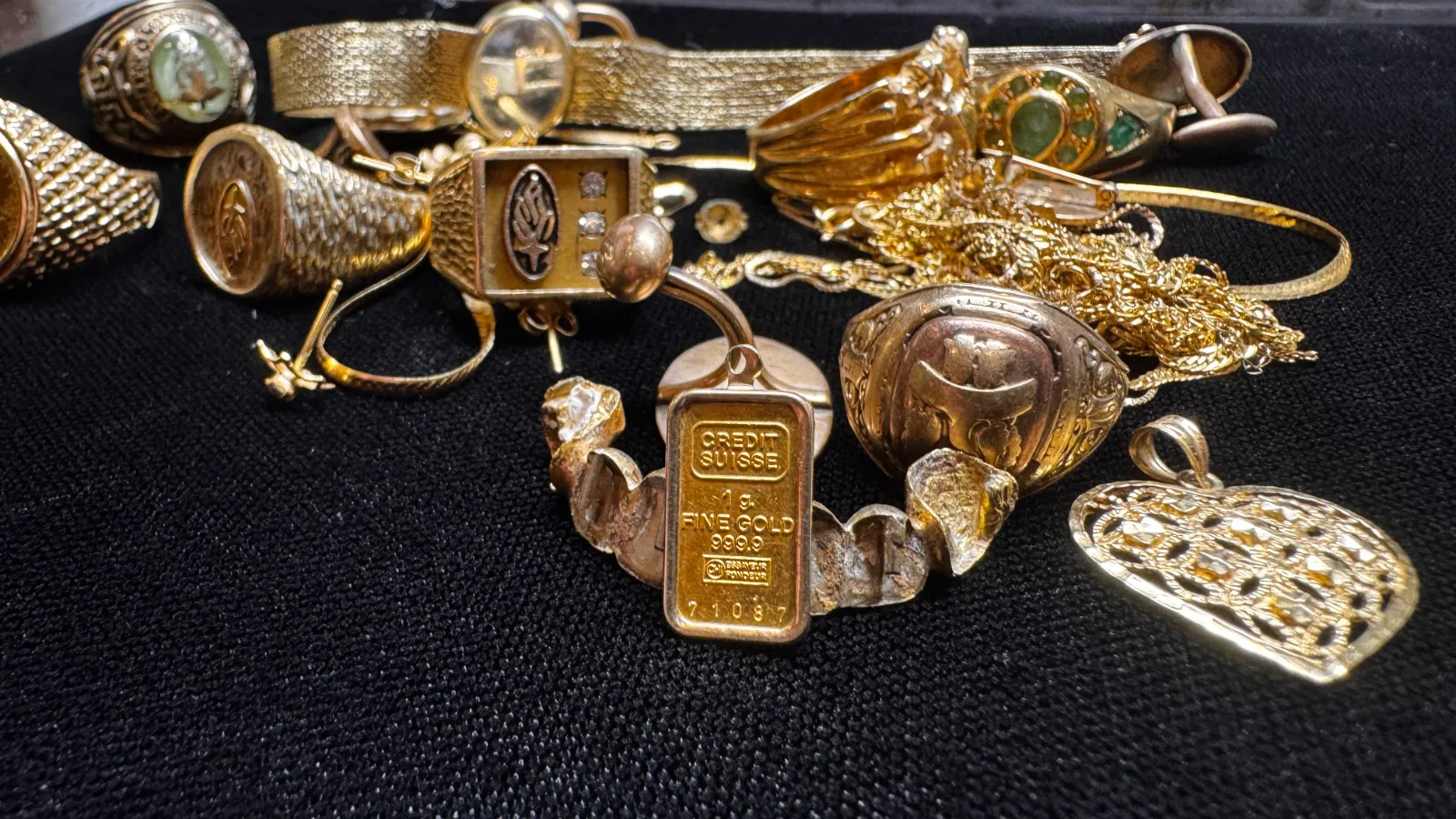
October 25, 2026
Inherited Gold Jewelry: Pawn Shop or Gold Dealer?
Inherited gold jewelry and unsure where to sell? Compare pawn shops vs. gold dealers on price, transparency, and trust — then get the best offer possible.
Read more →
Find out what yours is worth
Bring it by our Lenexa shop for a free, no-pressure evaluation. We test and weigh in front of you, explain the math, and pay on the spot if you accept.