October 8, 2026 · KC Gold and Silver
Best way to sell estate jewelry, ranked by payout
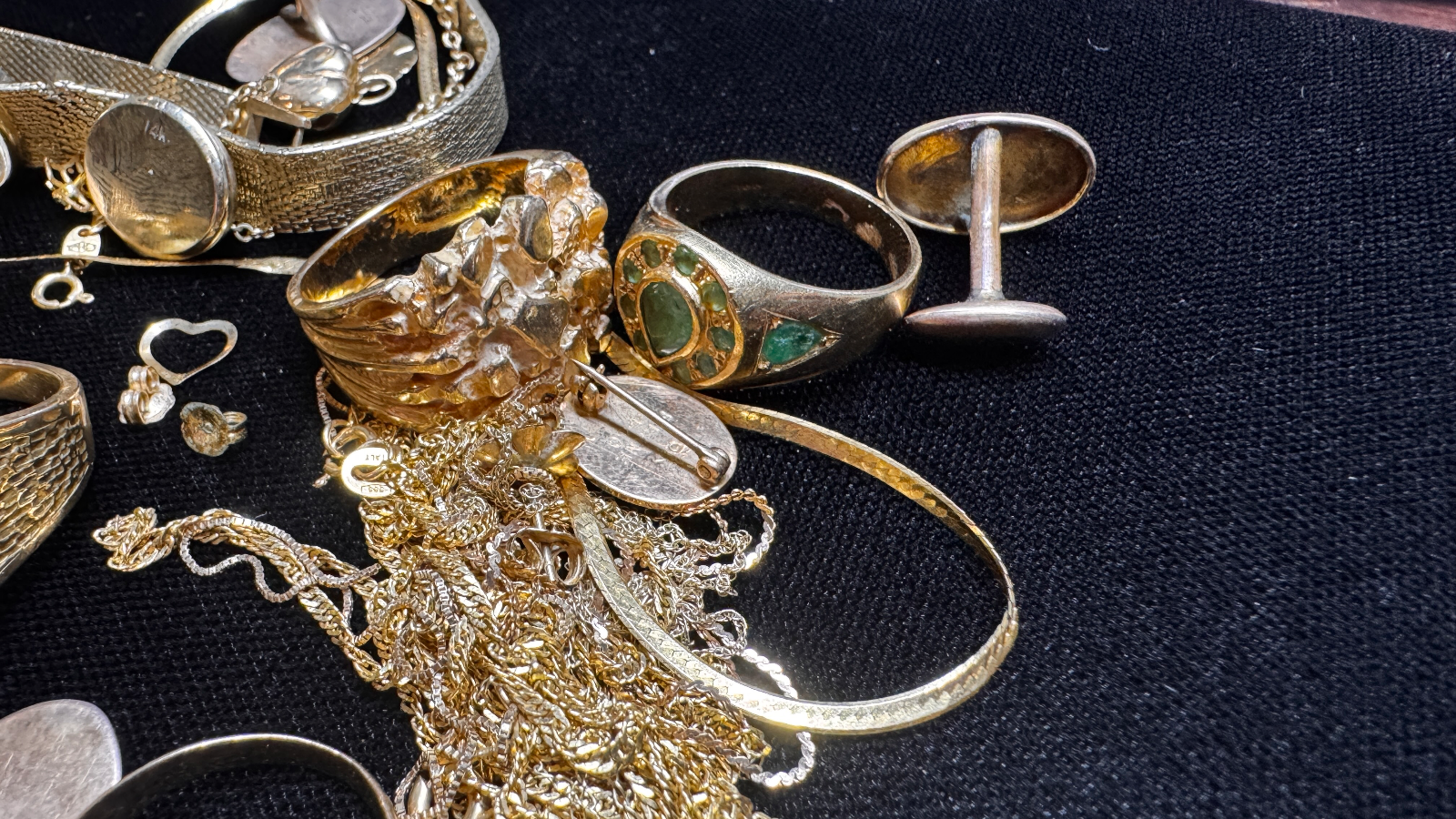
Picture a house that has to be emptied by the end of the month. On the coffee table sits a bag of jewelry: a broken gold chain, a few sterling pieces, a charm bracelet, and one brooch that might be something special. Working out the best way to sell estate jewelry mostly comes down to one idea. Not every piece in that bag has the same kind of value, so not every piece belongs in the same place.
Most people who sell inherited jewelry badly are not careless. They treat the whole bag as one lot and send it down one road. A plain gold chain and a signed brooch with its original box are both heirlooms, but they are worth different things to different buyers.
At KC Gold and Silver in Lenexa, Kansas, inherited pieces come across our counter all the time. This guide walks through the realistic routes from the most work to the least, so you can decide which pieces go where. We focus on gold jewelry and sterling silver, and we will say so plainly when a piece is better suited somewhere else.
Sort the bag before you choose a buyer
A few minutes of sorting saves a lot of back and forth. You are not trying to price anything. You are just making piles.
- Metal pieces: anything stamped with a karat mark such as 10K, 14K or 18K, and anything marked sterling or 925. Broken, bent or single pieces belong here too.
- Possible collector pieces: anything with a maker's name or signature, a fitted case, a receipt, a lab certificate, or a letter that explains where it came from.
- Everything else: costume or fashion jewelry with no stamp that points to gold or silver.
Look at ring bands, clasps and the backs of brooches and pendants for stamps. Photograph the pieces and keep any paperwork or boxes together with them. Paperwork matters mostly for the second pile, because a documented history is what a collector-minded buyer is paying attention to.
Listing it yourself on a marketplace
This is the most work of any option. You photograph each piece, write an honest description, answer messages, handle shipping and insurance, and deal with buyers who dispute condition or claim an item was not as described. Platforms also take a fee.
It can make sense for a single attractive piece you are happy to wait on. For an estate with a deadline, it rarely does. Broken chains, odd earrings and unmarked pieces tend to sit unsold, and you carry the risk of mailing valuables to a stranger. You are also trusting a buyer you cannot see to pay what they promised.
Auction houses and consignment: honest, but built for a few pieces
Auction houses and consignment sellers are a legitimate second route, and for the right piece they are the correct one. A signed piece from a known maker, a documented antique, or something with a compelling ownership story can attract collectors who care about more than the metal.
For most people clearing an estate, though, this route is impractical. Auctions and consignment come with:
- commissions and sometimes extra charges for photography, cataloguing or insurance
- a wait for the next sale, then another wait for payment
- the chance that a piece fails to meet its reserve or never sells and comes back to you
If you suspect one piece in the bag belongs in this category, keep it aside and let that one take the slow road. Do not send the whole collection with it. The gold chains and sterling pieces would be waiting months for a result that a different route could deliver in one visit.
Pawn shops: built around loans
A pawn shop's core business is lending money against items. You leave something as collateral, receive a loan, and can come back to reclaim it. Many pawn shops will also buy items outright, but the business is set up around resale and loan risk, so their offers are shaped by what they expect to be able to move later.
For an estate there is a practical mismatch. You are not planning to come back for the item, and pawn counters handle everything from tools to guitars, so metal purity is not usually their specialty. Pawn is quick and convenient, and it is fair to say so. It is simply not designed around gold and sterling the way a precious metals dealer is.
A local dealer: the short road for gold and sterling
If the value of a piece is in its metal, a local dealer is the most direct route. You bring the pieces in, the dealer tests them, weighs them, and explains what was found. If you agree, you leave with cash the same day. If you do not, you leave with your jewelry.
That is how it works at KC Gold and Silver. Everything is tested and weighed in front of you, the evaluation is free, and there is no pressure to sell. You can bring the full bag, sell some pieces, and take the rest home. We cover selling jewelry of all kinds, and if you are working through a family estate, our page to sell estate jewelry and our guide to selling inherited jewelry cover the specifics.
The best way to sell estate jewelry depends on the piece
For most inherited bags, the answer is a split. Metal pieces go to a local dealer. A rare signed piece with documents may be worth the slow route. Costume jewelry with no precious metal is usually a donation or a garage-sale item, since a metals buyer has nothing to weigh.
For most estate jewelry, where the value sits in the gold or sterling silver, the best way to sell estate jewelry is to take it to a local dealer who tests and weighs it in front of you and pays the same day.
If you are unsure which pile a piece belongs in, bring it along. Part of an evaluation is simply telling you what the piece is made of, so you can decide where it should go.
What to bring and what the visit looks like
- A government photo ID.
- The jewelry itself, loose or in the bag as you found it. No need to sort perfectly.
- Any papers, cases or letters that came with a piece.
- If you are selling on behalf of an estate, whatever paperwork shows your role. Call ahead and ask what we would like to see.
At the counter, each piece is tested and weighed while you watch. We explain what we found and make an offer. You decide. Nothing is committed until you say yes, and if you accept, payment is the same day. A small bag is a short visit. A full estate takes longer, so allow extra time, or call first.
Broken, tangled or tarnished: does it count against you?
For gold and sterling, much less than people fear. A snapped chain, a bent ring, a single earring or a clasp that no longer works are all normal to see. Tarnish on sterling is cosmetic, and you do not need to polish anything first. Please do not try to repair or clean pieces you suspect might be collectible, because that can hurt a collector's interest.
Condition matters much more for the second pile. A signed piece in good original condition with its box is a different story from a damaged one.
Frequently asked questions
Do I need an appraisal before I sell estate jewelry?
Not for pieces that are being sold for their metal. At KC Gold and Silver in Lenexa, we test and weigh the piece in front of you at no charge. A formal appraisal is mainly worth considering for pieces with notable stones, a famous maker, or a documented history.
Should I sell the whole collection together or piece by piece?
You can do either, and it does not have to be all or nothing. Many families bring the whole bag, sell the metal pieces, and keep sentimental ones or set aside possible collector items for another route.
Can I sell jewelry that is broken or missing stones?
Yes. Broken chains, bent rings and single earrings are routine for a gold and silver buyer, because the metal is what is being evaluated. Bring them in as they are.
Is there a fee to have my jewelry evaluated at KC Gold and Silver?
No. The evaluation is free and carries no obligation. You can have everything looked at and still walk out with all of it.
How quickly can I be paid?
Same day. If you accept our offer at the counter in Lenexa, you are paid the same day. Call ahead if you have a large estate so we can plan time for it.
How do I reach KC Gold and Silver in Lenexa?
Call (913) 565-4653, which is also (913) 565-GOLD, or visit kcgoldandsilver.com. You are welcome to call ahead with questions about an estate, or to simply walk in with the bag.
Keep reading
October 26, 2026
Local Gold Buyer or Mail-In Service: The Real Difference
Selling a parent's gold jewelry as a family? See how a local gold buyer compares with a mail-in service when several people have to agree.
Read more →
October 25, 2026
Inherited Gold Jewelry: Pawn Shop or Gold Dealer?
Inherited gold jewelry and unsure where to sell? Compare pawn shops vs. gold dealers on price, transparency, and trust — then get the best offer possible.
Read more →
Find out what yours is worth
Bring it by our Lenexa shop for a free, no-pressure evaluation. We test and weigh in front of you, explain the math, and pay on the spot if you accept.