October 7, 2026 · KC Gold and Silver
Cash for Silver Flatware: How the Process Works and What to Expect
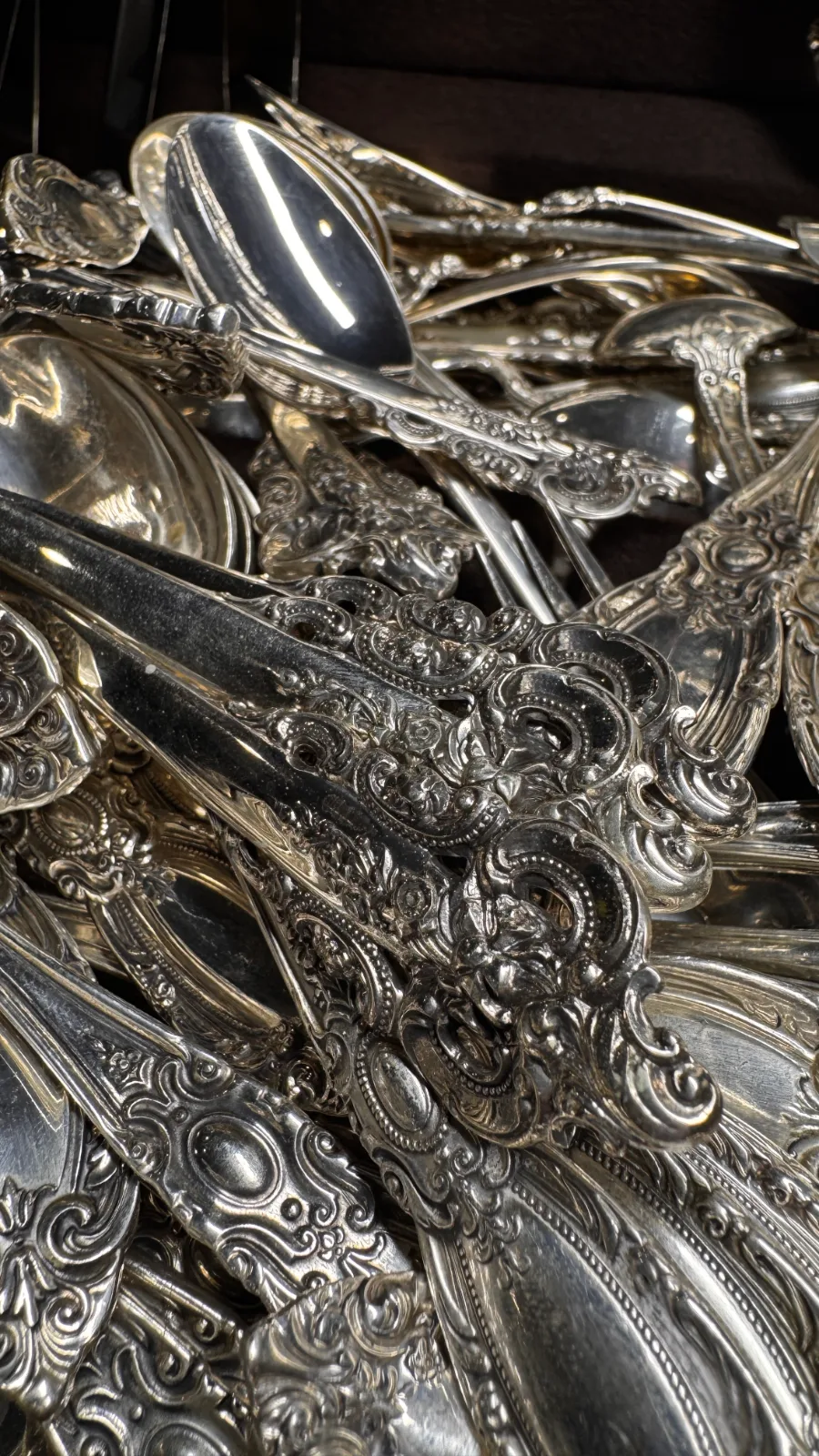
A chest of forks and spoons has been sitting in a drawer for years, and now it is yours to deal with. Maybe it came from a parent or a grandparent. Maybe you have never used it. Either way, you want to know whether it is worth anything and how to turn it into cash for silver flatware without a headache. At KC Gold and Silver in Lenexa, Kansas, people bring us exactly this box almost every week, and the path from drawer to payment is shorter than most expect.
This guide skips the pricing math on purpose. Anyone can find a formula online, but a formula will not tell you what a buyer does with your set, which pieces get set aside, or how long you will be standing at the counter. That is what we cover here.
Before you go anywhere: sterling or plated?
Whether you have solid sterling or silverplate shapes everything that follows. Sterling is a silver alloy all the way through. Silverplate is a base metal with a very thin silver coating, and it holds little to no value for a precious metals buyer.
Turn a piece over and read the back of the handle. Sterling pieces made in the United States are normally stamped "Sterling" or "925". Marks such as "EPNS", "Silver Plate" or "Community Plate" point to plated ware. If the stamp is worn, look at the places that take the most rubbing, like the tips of fork tines. A yellow, reddish or gray tone showing through the surface suggests plating that has worn through. Green crusting in the crevices points the same way, while sterling tarnishes dark gray or black.
If you cannot tell, bring it anyway. Sorting it out is part of what happens at our counter. When you are ready to sell silver flatware, our flatware page explains how we handle full and partial sets.
Getting cash for silver flatware: four routes, from most effort to least
Here are the realistic paths. They are ordered by how much work they put on you.
Selling it yourself online
You photograph every piece, write the listing, answer questions from strangers, pack the set, and ship it insured. A buyer can then claim an item was not as described, and you deal with the dispute. A mail-in refiner is a variation: you send the set off, wait for it to be processed, and accept the result without having watched anyone handle it. Both can work. Both ask for patience and for trust in someone you will never meet.
Collectors, consignment and pattern specialists
This route is honest, and for the right set it makes sense. A complete, matched service in a sought-after pattern, or a piece from a famous maker, may interest a collector who cares about the design and not just the metal. The catch is time and fit. Consignment and auction sales pay after the item sells, which can take weeks or months, and the sellers who gain most are those with a large, complete, well-kept set. For a mixed drawer of odds and ends, it is rarely practical.
A pawn shop
Pawn shops are built mainly around loans. You leave the item as collateral, receive a loan against it, and come back to repay it. Many pawn shops also buy outright, so it is fair to ask. But the business model centers on lending against items and reselling unclaimed ones, which is a different job from assessing a flatware set for its silver. If you want a clean sale of sterling, it is worth knowing which of the two you are walking into.
A local dealer
A local dealer who buys precious metals does one thing: look at your silver, test it, weigh it, and make you a purchase offer on the spot. There is nothing to list and nothing to mail. For most inherited sterling flatware, a local dealer who tests and weighs the set in front of you is the quickest and simplest way to turn it into cash. That is the service we provide at KC Gold and Silver.
What happens when you bring a set to the counter
The visit is short and the whole thing takes place where you can see it.
- Sorting. We separate sterling from plated pieces and set aside anything that is not solid silver.
- Weighing. The sterling goes on the scale while you watch.
- Testing. A small test confirms the metal, for example a drop of testing acid on an inconspicuous spot such as the back of a handle. Sterling and plated metal react differently.
- The offer. You hear the result and how we got there. There is no pressure and no obligation.
- Payment. If you accept, you are paid in cash the same day. If you decline, you pick up your silver and go home.
The evaluation is free. You can phone ahead on (913) 565-4653 if you would like to confirm timing, though you are welcome to walk in. You can also see our locations page for details.
What to bring, and what to leave alone
Bring everything: full place settings, odd spoons, serving pieces, the piece you are unsure about. A mixed lot is no trouble. Mention the pattern name if it is stamped on the back, and bring any original box or paperwork if you happen to have it.
Leave the polishing cloth in the drawer. Tarnish does not change what the metal is, and scrubbing can wear away surface detail that matters to a collector. Also leave knives as they are. Knife handles are commonly filled with another material, so they are handled separately from forks and spoons, and the buyer needs to see them whole.
What does not matter much: a monogram, light scratches, a tarnished finish, or a set missing a few pieces. These are common in inherited flatware and do not stop it from being evaluated.
If you also have a teapot, creamer or tray, our silver tea set buyer's guide covers those pieces.
Frequently asked questions
Do monograms, dents or missing forks make flatware harder to sell?
Not in any way that stops a sale. Monograms and wear are normal on pieces that were used for decades, and a partial set can still be tested and weighed. At KC Gold and Silver in Lenexa we look at incomplete sets every week.
Why are knives treated differently from forks and spoons?
Many knives have handles filled with a different material, with only a sterling shell. Because of that, they are evaluated separately. Please bring them whole, with the blade attached, so we can check them properly.
Can I bring sterling and plated pieces in one box?
Yes. Many inherited sets are a mix, and sorting them is part of the visit. We separate what is sterling from what is plated so you know exactly where each piece stands.
Is there a charge for an evaluation at KC Gold and Silver?
No. Evaluations are free, with no pressure and no obligation to sell. If you decide not to accept, you take your flatware back home.
How soon do I get paid?
If you accept our offer, you are paid in cash the same day, at the counter in Lenexa. There is no shipping and no waiting for a check.
How do I reach KC Gold and Silver in Lenexa?
Call (913) 565-4653, which is also (913) 565-GOLD, or visit kcgoldandsilver.com. You can phone ahead with questions about your flatware, or simply bring it in.
Keep reading
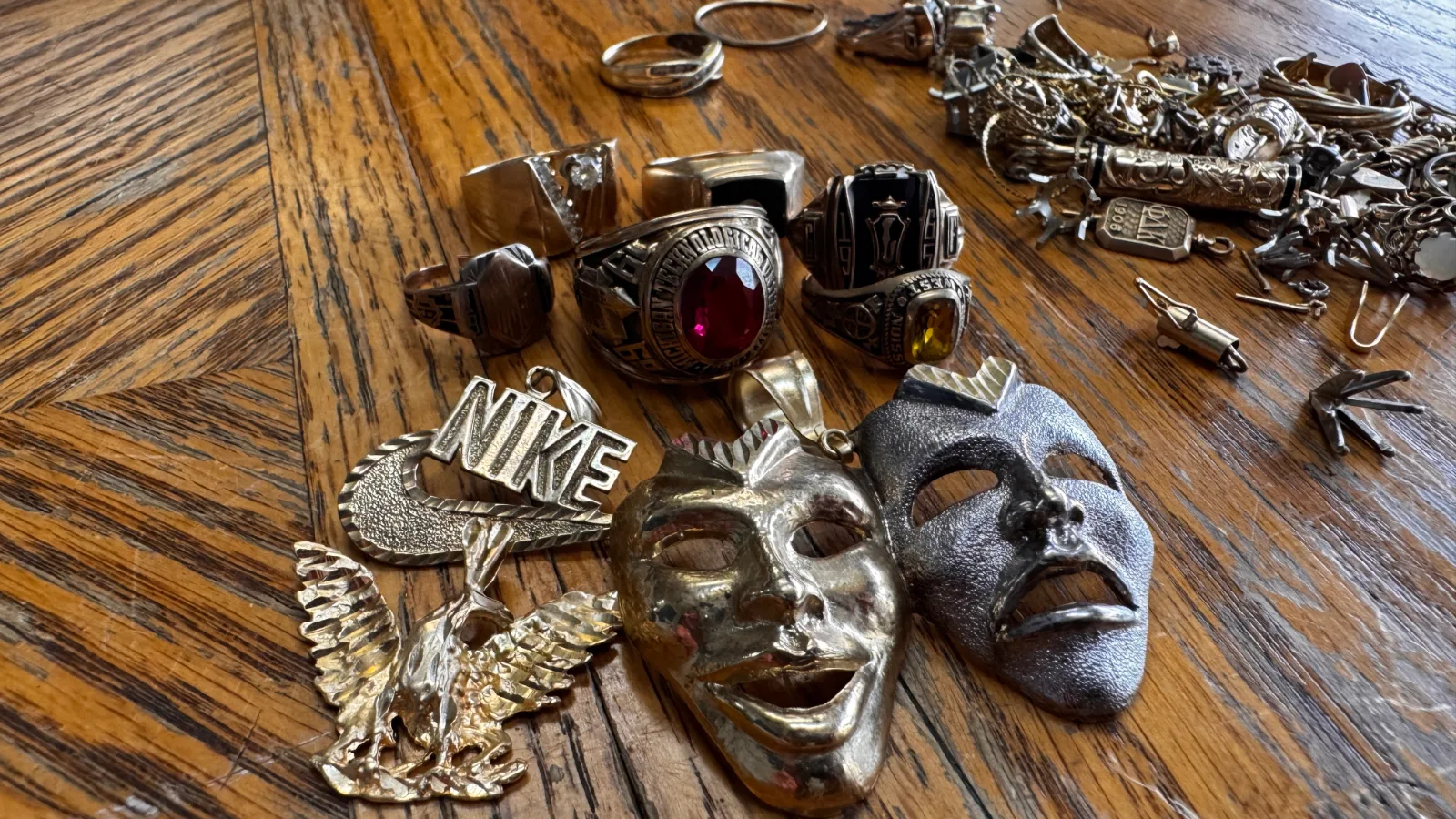
October 26, 2026
Local Gold Buyer or Mail-In Service: The Real Difference
Selling a parent's gold jewelry as a family? See how a local gold buyer compares with a mail-in service when several people have to agree.
Read more →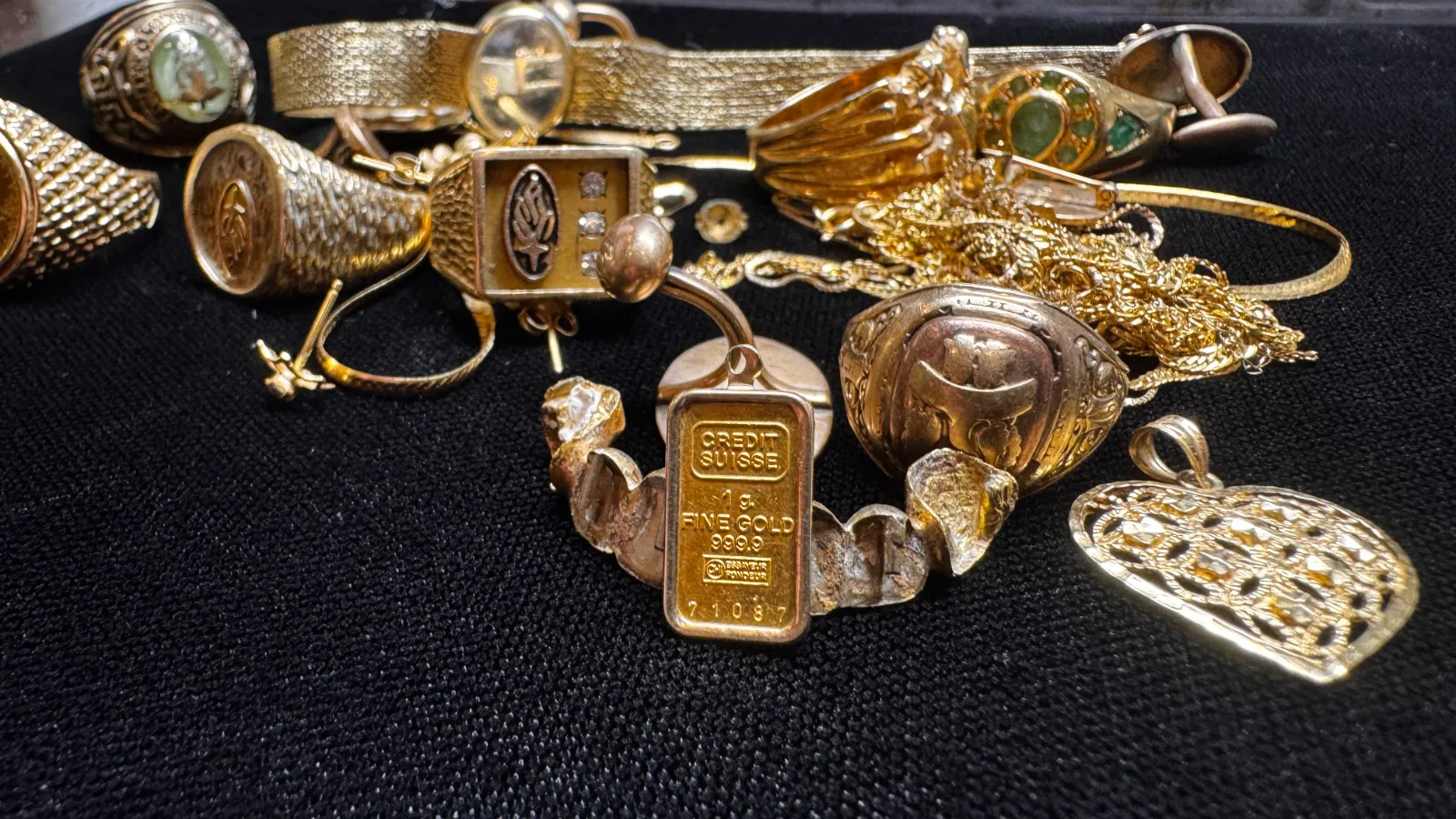
October 25, 2026
Inherited Gold Jewelry: Pawn Shop or Gold Dealer?
Inherited gold jewelry and unsure where to sell? Compare pawn shops vs. gold dealers on price, transparency, and trust — then get the best offer possible.
Read more →
Find out what yours is worth
Bring it by our Lenexa shop for a free, no-pressure evaluation. We test and weigh in front of you, explain the math, and pay on the spot if you accept.