October 28, 2026 · KC Gold and Silver
Selling Gold? Here's How to Avoid Getting Ripped Off
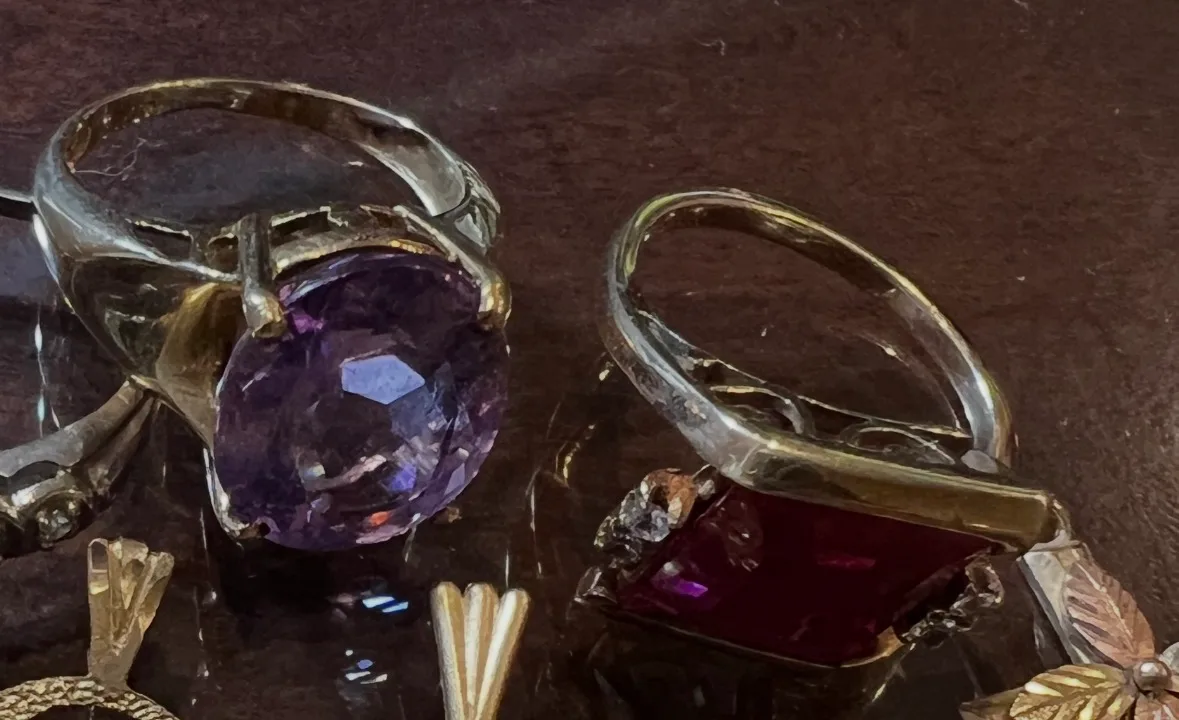
A parent's jewelry box ends up on the dining room table, and nobody in the family wants what is inside. At that point the question is less about gold and more about trust. One person has to carry the box to a buyer, and everyone else wants to know they were not shortchanged. So how do I avoid getting ripped off selling gold that belongs to three or four people at once? Mostly by choosing a counter where every step can be seen, and by settling a few things at home before anyone gets in a car.
Settle the family part before anyone drives anywhere
Most arguments over an estate box are not about the gold. They are about who decided what, and whether the person who made the trip got a better deal than they admitted. A few small agreements remove most of that.
- Pull out anything someone wants to keep. Do this before any metal is weighed. A brooch or a wedding band that means something to one sibling should not end up in a scale pan by accident.
- Agree on how the money will be divided. Equal shares is the simplest rule, and it works because nobody has to argue about which piece was "worth more."
- Name one person to say yes at the counter, and tell the others what that person is allowed to accept.
- Photograph the box on the table. Lay it all out, take one clear picture, and send it to the group. Later, nobody has to wonder what went in.
When the whole family asks how do I avoid getting ripped off selling gold
Underpaying a seller is rarely dramatic. It usually happens in small, quiet steps that a person who has never sold gold has no reason to notice. These are the ones worth knowing about, since an estate box nearly always holds a mix of karats.
Everything priced as the lowest karat. A buyer scoops your 10K, 14K and 18K pieces into one pile and prices the pile as if it were all the weakest gold. Each piece should be rated on its own, and an honest buyer does it without being asked.
A mix-up of units. Gold gets quoted by the gram and by the pennyweight, and the two numbers are not interchangeable. A figure that sounds generous in one unit can be ordinary in the other. The unit should be spoken out loud and should match what the scale is showing.
A stamp overruled with no test. If your ring says 14K and the buyer says it is something lower, a test result should appear right then, in front of you. A different number delivered with a shrug is not a result.
Charges that show up after the offer. Any deduction should be explained before you agree to anything. If the money in your hand is lower than the number you were told and nobody can say why, something is wrong.
A clock on the offer. Lines like "the market is about to move" or "this only holds for ten minutes" are meant to hurry you. A fair offer is still fair after the family has stepped outside to talk it over.
What honest testing looks like at the counter
A magnet proves very little. Gold is not magnetic, but neither are plenty of lookalike metals, so passing a magnet is a starting point at best. A scratch and a drop of acid says more, though it only reads the surface it touches, and a thick plating can fool it if the scratch is shallow.
What matters for your family is less the method and more the setting. The scale should face you. The testing should happen where you can watch it, not in a back room. At KC Gold and Silver in Lenexa, everything is tested and weighed in front of you, and the whole process is laid out on our how it works page if you would like to read it before coming in.
Why the written slip matters most to the relatives who stay home
The sibling who did not make the trip will want to see what happened. A useful receipt lists the items sold, the weight, the karat given to each, any deduction, and the amount paid. A slip that says only "gold items" cannot settle an argument later, and it leaves the person who carried the box in an awkward spot. Ask for the written version, photograph it, and send it to everyone the same day.
What a local dealer cannot do for your family
We will not pay what a jewelry store charges for a new piece, and no honest dealer buying for resale or refining can. A fair offer reflects the metal in the piece, with room for the shop to stay in business, not the sentimental weight it carried in your mother's drawer. We will not quote a figure from a photograph either, because a piece has to be weighed and tested before anyone knows what it is. If you want a general sense of how value is worked out before your visit, our guide on what your gold is actually worth is a good place to start.
Bringing the box to Lenexa
Bring it the way you found it. Tangled chains, a bracelet with a broken clasp, a single earring, a dented ring, a locket with a missing stone: all of it can be looked at. You do not need to sort it by karat, and you do not need to clean it. Tarnished sterling is fine as it is, and so are the larger sterling pieces that tend to sit at the bottom of an estate, such as a tray, a pitcher or a tea service.
If more than one relative wants to be there, bring them. If somebody lives out of town, a phone call from the counter works. You will get a free evaluation, there is no pressure to sell, and if you say yes the cash is same-day. If the family wants to step outside and talk first, that is normal, and the offer will be explained again when you come back in. To plan a visit, you can book an appointment or call (913) 565-4653, which is also (913) 565-GOLD.
Our plain answer
The best protection when selling gold that came out of a parent's house is a buyer who weighs and tests every piece in front of you, rates each karat on its own, and hands the family a written slip that everyone can read. Agree on the split at home, keep the sentimental pieces out of the box, and the rest of the decision gets much easier.
Questions families ask before bringing an estate box in
Can one sibling take the jewelry in for the whole family?
Yes. Most families send one person. It helps if the others have agreed beforehand on how the money will be divided and what the person at the counter is allowed to accept. KC Gold and Silver in Lenexa is happy to have more than one family member there, or to let someone listen in by phone.
How do we split the money fairly if nobody wants the jewelry?
Equal shares of the total is the simplest rule and the one that causes the fewest arguments. Settle it before the visit so nobody is working out fairness while the pieces are on the scale.
What about the pieces somebody might want to keep?
Take them out first. Once the family has decided, only the rest goes in the box. It is much harder to undo a sale than to hold a piece back for another week.
Do broken chains, single earrings and tarnished pieces still count?
They can. Condition matters much less than people expect for gold and sterling, since what we are buying is the metal. Bring them as they are.
How long does a visit take, and what happens if we do not want to sell?
A box of jewelry is usually a short visit, though a larger estate takes longer because each piece is handled separately. You will see the weighing and testing, hear the offer, and decide. If you leave without selling, there is no charge and no pressure.
What is the quickest way to reach KC Gold and Silver before we bring the box?
Call (913) 565-4653, which is also (913) 565-GOLD, or visit kcgoldandsilver.com. Tell us roughly what is in the box and we can tell you what to expect when you arrive in Lenexa.
Keep reading
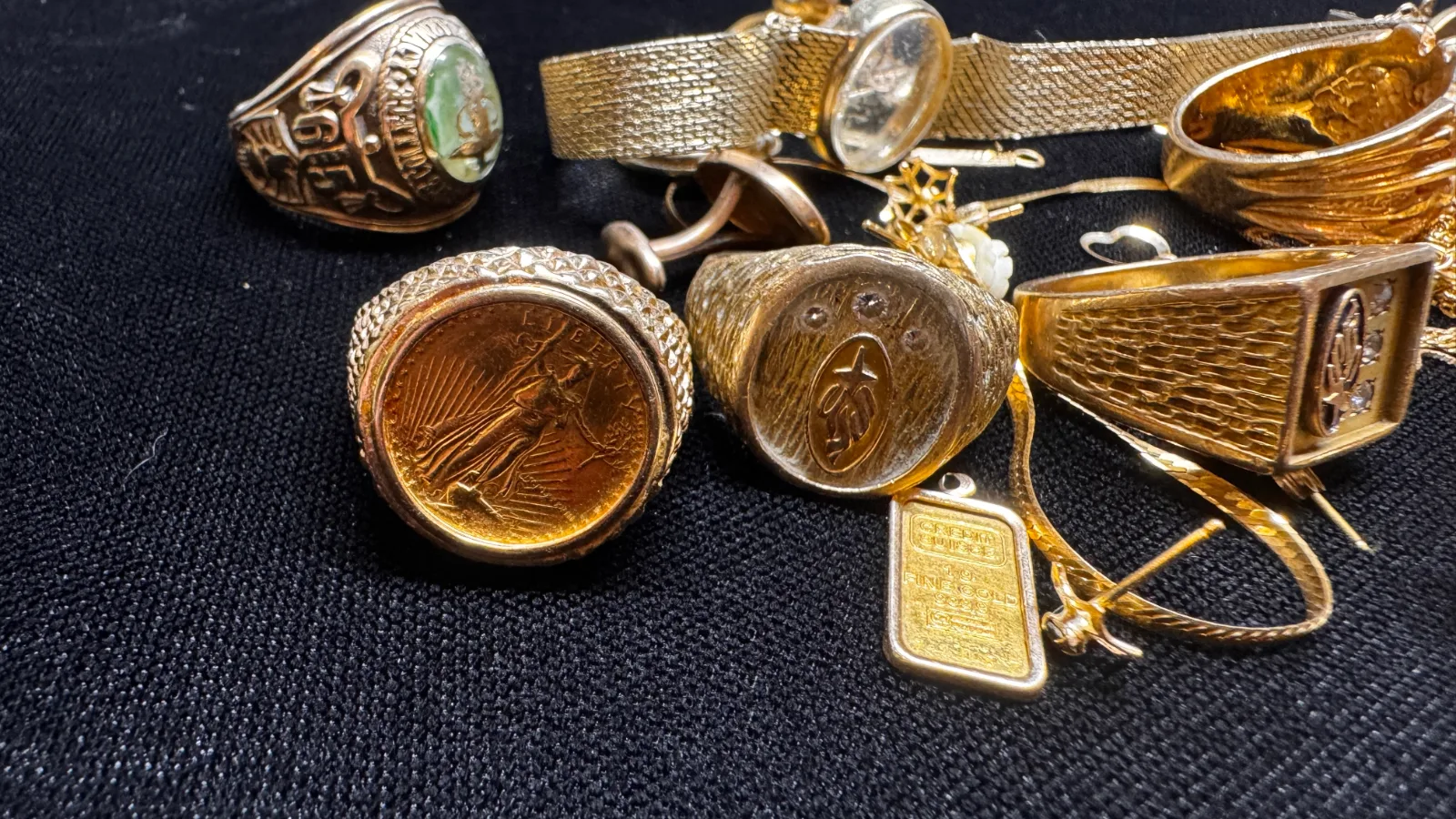
October 27, 2026
Selling 10K vs 14K Gold: The Real Dollar Difference
Wondering about the difference between 10K and 14K gold when selling? See the real payout gap with live spot price math and tips to get the best offer.
Read more →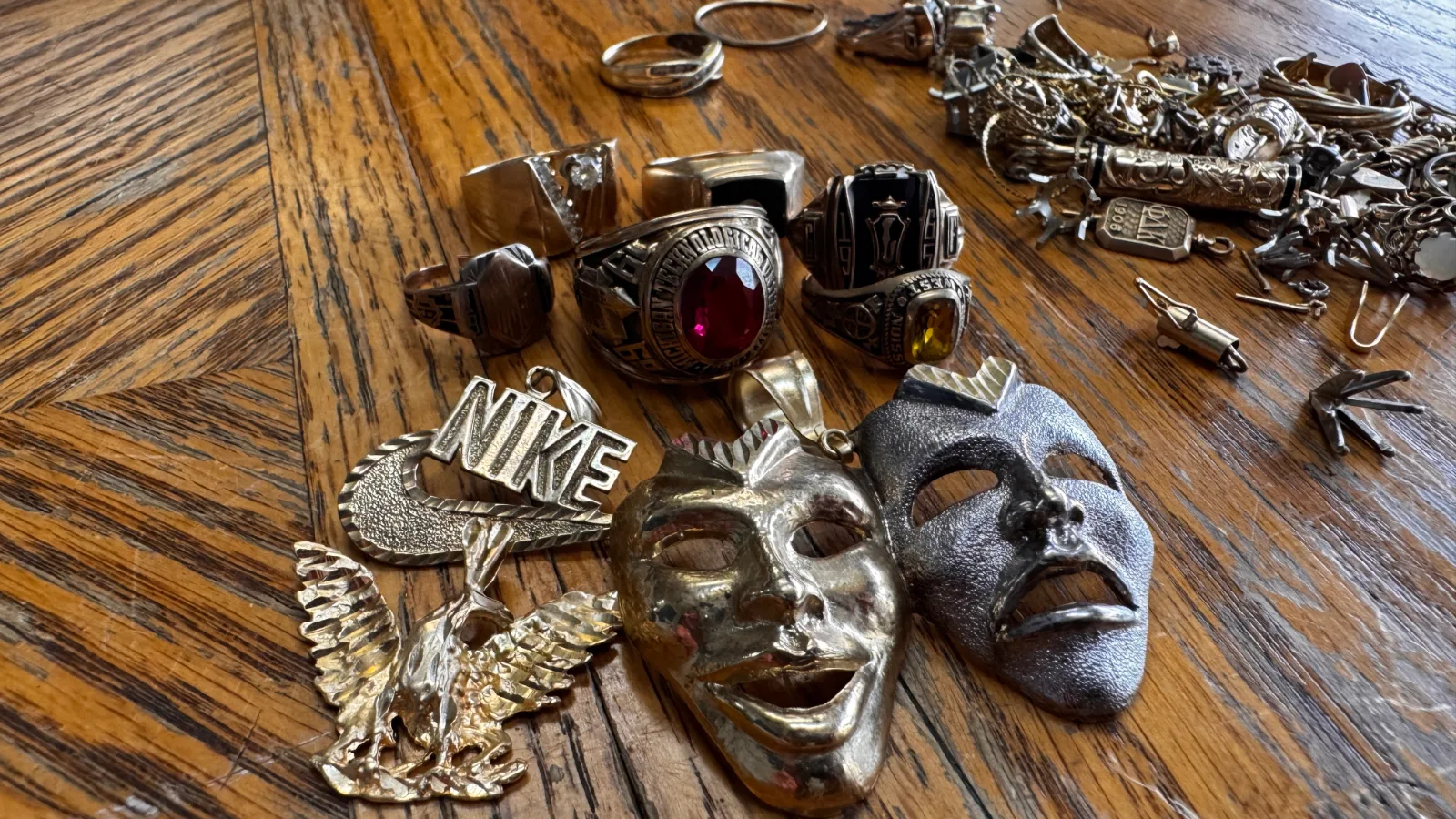
October 26, 2026
Local Gold Buyer or Mail-In Service: The Real Difference
Selling a parent's gold jewelry as a family? See how a local gold buyer compares with a mail-in service when several people have to agree.
Read more →
Find out what yours is worth
Bring it by our Lenexa shop for a free, no-pressure evaluation. We test and weigh in front of you, explain the math, and pay on the spot if you accept.