October 27, 2026 · KC Gold and Silver
Selling 10K vs 14K Gold: The Real Dollar Difference
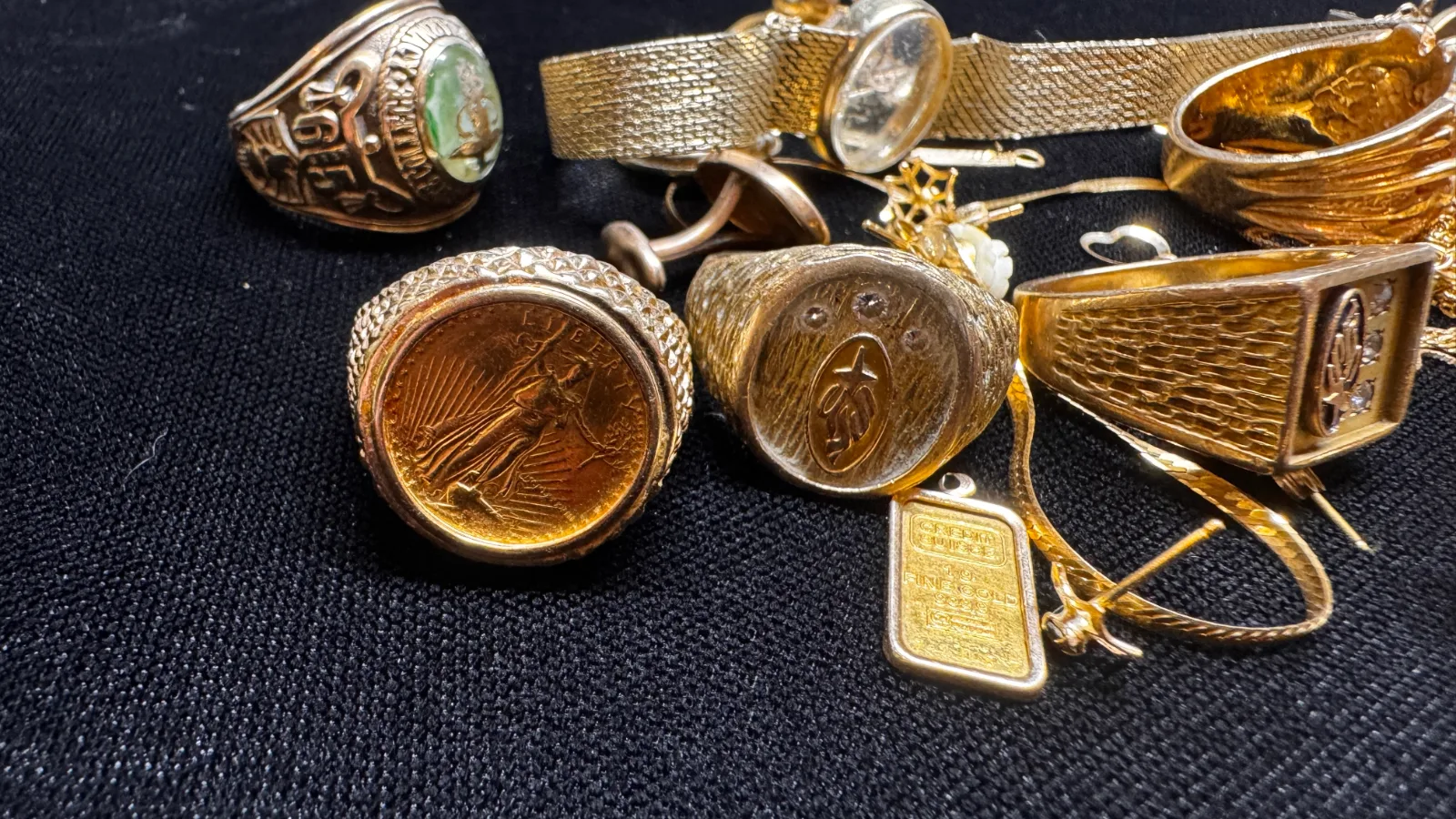
People ask us about the difference between 10K and 14K gold when selling more often than almost anything else, usually with a ring in one hand and a chain in the other. The short version is that the karat stamp tells us how much real gold is in the piece, and the rest of the story happens at the counter, where we look at the piece, weigh it and talk it through with you. This article walks through that visit from the front door to the cash, so you know what to expect before you drive to Lenexa.
The difference between 10K and 14K gold when selling, as it shows up at the counter
Here is the plain version.
The difference between 10K and 14K gold when selling is that 14K holds more actual gold in every gram, so a 14K piece earns a higher share of the value than a 10K piece of the same weight.
The other metals mixed into either karat, such as copper, silver or zinc, are there for strength and color. They are not what a gold buyer is paying for. That is why two chains that look identical and weigh the same can end up with different numbers once the stamp is read.
Weight still matters a great deal. A heavy 10K bracelet can easily outweigh, in value, a thin 14K chain. The stamp is half of the picture and the scale is the other half. If you want a longer guide to the marks themselves, our gold karat guide covers them.
Before you leave the house
You do not need to prepare much, and you do not need to clean anything.
- Gather everything gold, including the odd pieces. Single earrings, broken chains, bent rings and dented charms all count. Damage does not stop gold from being gold.
- Sort by stamp if you feel like it. Putting the 10K in one pile and the 14K in another saves a few minutes, but it is a courtesy, not a requirement. We will sort it ourselves if you would rather not.
- Leave the polishing cloth in the drawer. Tarnish, scratches and grime do not change what the metal is.
- Have a government-issued ID with you. A sale is recorded, so we will need it.
- Skip the stone removal. Do not pry anything out of a setting. Leave it as it is and we will deal with it.
If you only have a vague idea whether a piece is gold at all, bring it anyway. Finding out is part of the free evaluation.
The first minute: the stamp and a close look
You set your pieces on the counter and we start by reading the marks. A 10K piece may say 10K or 417. A 14K piece may say 14K, 583 or 585. Some old pieces have no readable stamp because the band has worn thin or a jeweler resized it, and that is fine, because the stamp is only a starting point.
A stamp tells us what a piece claims to be. It does not prove it. Plated costume jewelry can carry a convincing mark, so every piece is tested and weighed in front of you. You see the result as it happens, not after we carry the tray to a back room.
The next few minutes: testing, weighing and separating
Testing tells us whether the stamp holds up and which karat we are dealing with. Then each piece, or each group of pieces of the same karat, goes on the scale.
Several things get sorted out here:
- Stones and non-gold parts. A solitaire, a pearl, a steel spring or a plastic bead is not gold, so it is accounted for separately from the metal.
- Mixed pieces. Sometimes a clasp or a repair is a different karat from the rest of the chain. We check the sections individually, and we will point out which part is which.
- Pieces that fail the test. Gold-filled and gold-plated items look right and are not solid gold. We tell you plainly when something is one of those, rather than slipping it into the pile.
This is the part people tend to watch closely, and we would rather you did. If you want to know why a certain chain landed where it did, ask, and we will show you.
What condition does and does not matter
For gold that is being valued as gold, most damage is irrelevant. Broken clasps, snapped chains, bent prongs, missing stones and worn-down shanks all leave the metal untouched.
What can change the conversation is a piece that has value as a piece. A signed design, an unusual antique or a well-made item may deserve a second look before it is treated as scrap, and sometimes we will tell you it is worth keeping or wearing instead. We would rather say so than melt something with more life left in it.
The offer, and what you do with it
Once the testing and weighing are finished, we give you a number for the lot. It is based on what the metal is and what it weighs, and nothing is deducted afterward. We cannot quote a number from a photo or a phone description, because the piece has to be on the scale first.
Then it is entirely your call. There is no pressure and no clock. If the offer suits you, you leave with same-day cash. If you would rather think about it, you pick your pieces back up and walk out with them, and the evaluation cost you nothing.
How long it takes
A small handful of pieces is usually a short visit. A full jewelry box or an estate drawer takes longer, mostly because every piece gets tested individually. If you have a lot to bring, it is worth phoning first so we can tell you whether it is a busy time at the shop.
Where 10K and 14K sit side by side
Here is how the two compare in practice:
- Same weight: the 14K piece will come out ahead, because there is more gold in it.
- Different weights: the heavier piece can win even when it is the lower karat.
- Same stamp, different condition: usually no difference for melt purposes.
- Gem-set pieces: only the gold counts toward the metal, so a heavy setting may hold less gold than it looks like.
If you are curious what a particular piece might do before you make the trip, our page on how much your gold is worth explains how we think about it, and we will put a real number on it once it is on the scale.
Questions people ask about 10K and 14K gold in Lenexa
Will a 14K piece always bring more than a 10K piece at KC Gold and Silver?
Not always. At the same weight, yes, 14K holds more gold and earns a higher share. But a heavy 10K piece can be worth more than a light 14K one, so the scale matters as much as the stamp.
Can I bring 10K and 14K pieces in the same bag?
Yes. Put the whole lot in one bag if that is easier, because separating the karats is our job once you arrive. Sorting it first at home is a nice touch, but nobody will mind if you do not.
What if my stamp is worn off or I cannot read it?
Bring the piece in anyway. Stamps wear down, especially inside old rings, and testing tells us what the metal is whether or not the mark survived.
Does a stone or a broken clasp lower what I get paid for the gold?
The gold is valued as gold, and the stone or non-gold part is handled separately. A broken clasp or a bent setting does not change the metal itself.
How long will a visit to the shop in Lenexa take?
A few pieces usually go quickly. A large collection takes longer because each piece is tested and weighed. Phone ahead if you are bringing a lot and want to plan your time.
Can I call KC Gold and Silver with a question before I come in?
Yes. Call (913) 565-4653, which is also (913) 565-GOLD, or visit kcgoldandsilver.com. We cannot price your gold over the phone, but we can tell you what to bring and what to expect. Tested and weighed in front of you, free evaluation, no pressure, and same-day cash if you decide to sell.
Keep reading
October 26, 2026
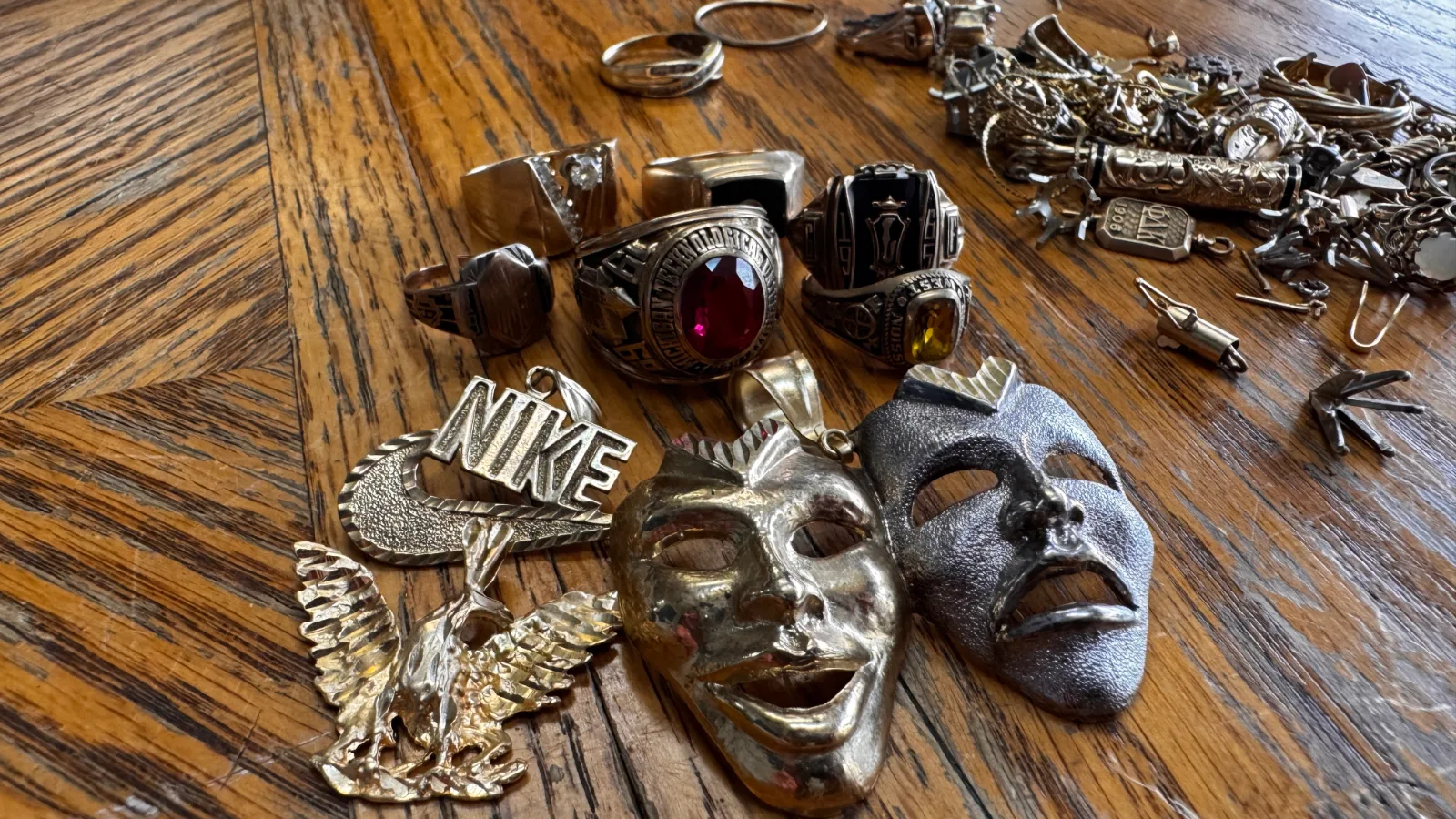
Local Gold Buyer or Mail-In Service: The Real Difference
Selling a parent's gold jewelry as a family? See how a local gold buyer compares with a mail-in service when several people have to agree.
Read more →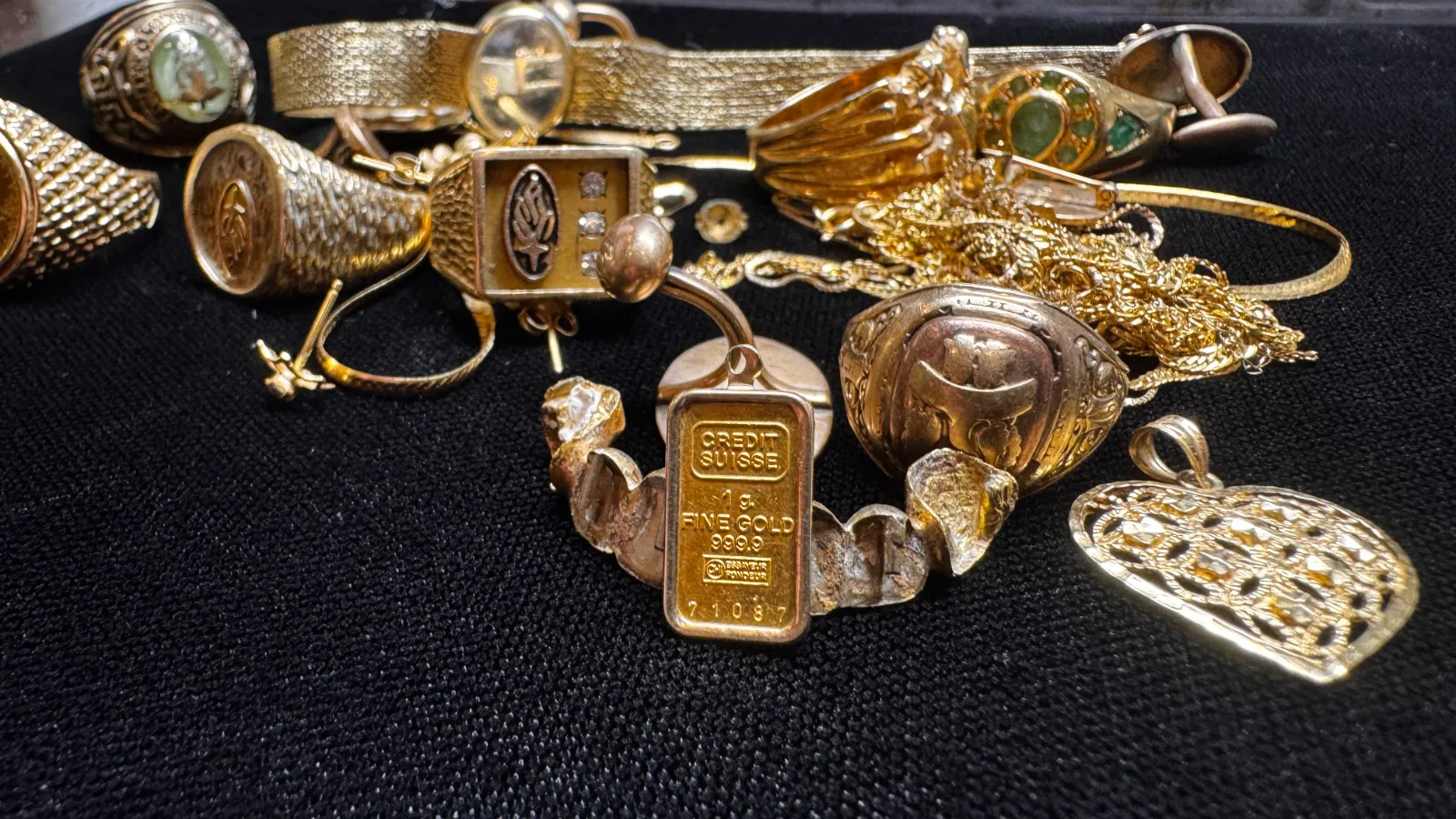
October 25, 2026
Inherited Gold Jewelry: Pawn Shop or Gold Dealer?
Inherited gold jewelry and unsure where to sell? Compare pawn shops vs. gold dealers on price, transparency, and trust — then get the best offer possible.
Read more →
Find out what yours is worth
Bring it by our Lenexa shop for a free, no-pressure evaluation. We test and weigh in front of you, explain the math, and pay on the spot if you accept.