October 16, 2026 · KC Gold and Silver
Sell Silver Flatware Locally or Online: Which Pays More?
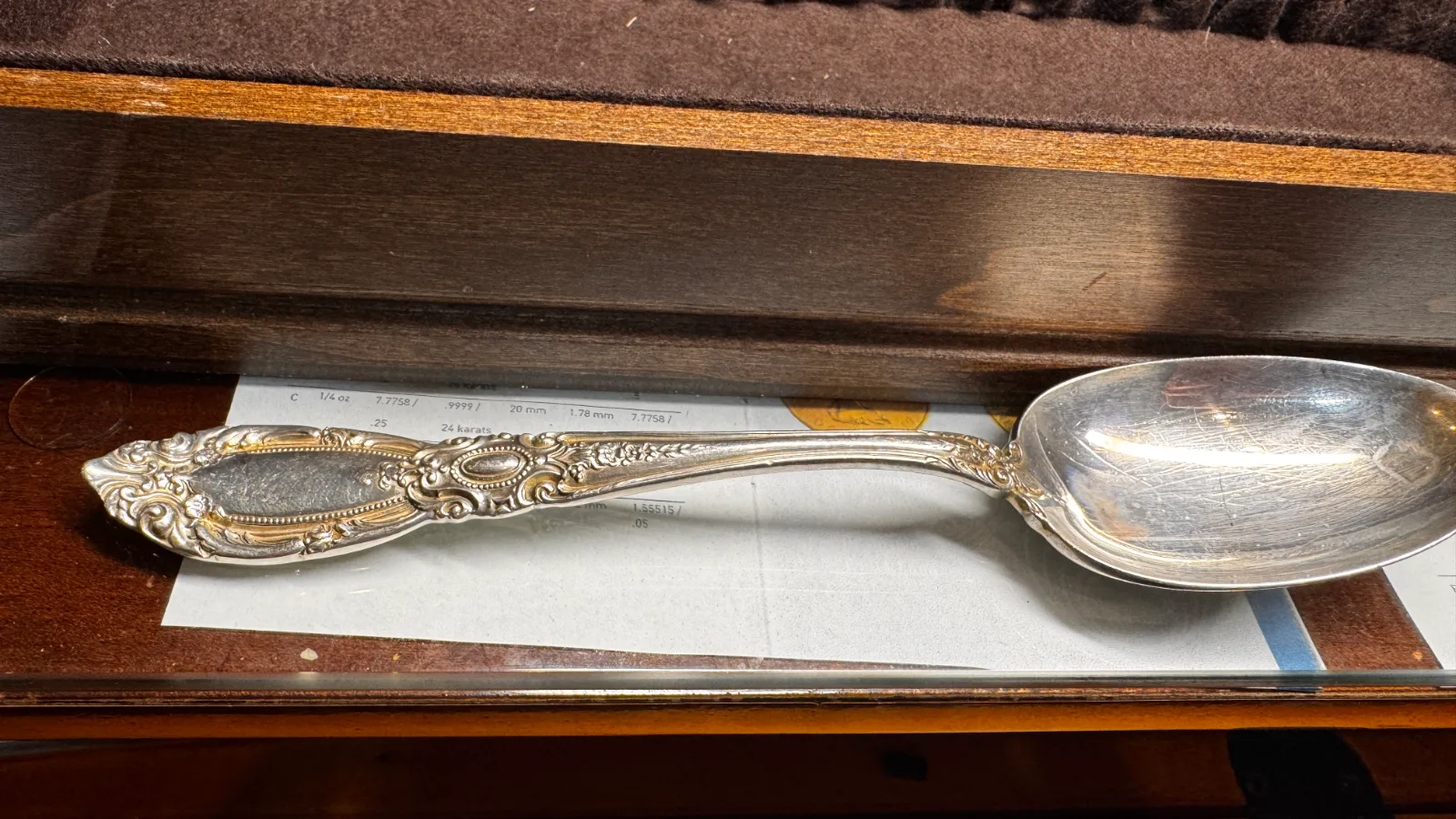
You can sell silver flatware locally or online, and the better route depends less on the website or the shop than on what is in your drawer. A complete set in a pattern collectors chase is one kind of thing. A mixed handful of forks, a monogrammed set, or a service with half the pieces missing is another. We buy sterling in Lenexa every week, so this guide is written from the dealer's side of the counter, including the parts that don't flatter us.
Why the answer changes when you sell silver flatware locally or online
Sterling flatware has two kinds of value. One is the silver in it. The other is what a collector will pay for a particular maker, a particular pattern, and a set that is complete and clean. A shop like ours buys the first kind. An online collector buyer may pay for the second.
That is the whole comparison. When a set has real collector appeal, a buyer on a national marketplace can pay more than any dealer, because that buyer is shopping for a pattern and not for metal. When the set has no such appeal, nobody online is going to pay extra for it either, and the listing, the packing and the waiting buy you very little.
What a dealer is actually buying
When we buy a set, we are buying silver that has to be sold on, usually to a refiner. We can't pay what a replacement-pattern shop or a collector would charge at retail, because we aren't selling forks to people setting a table. The offer has to leave room for us to cover our costs and stay open.
We weigh and test the pieces in front of you, we explain what we found, and we pay in cash the same day. What you get for that is certainty and speed. What you give up is any extra a collector might have paid. That trade is fair for most flatware, and not fair for a few sets. We would rather tell you that than have you find it out later.
What a collector can pay that a shop can't
Some makers and patterns are searched for by name, and complete services with their serving pieces are the ones that draw attention. If you suspect yours is one, it is reasonable to look at what sets like it have actually sold for, not what they are listed at. Listings show hopes. Sold items show what happened.
Things that tend to weaken collector interest:
- Missing pieces or odd numbers of each piece
- A monogram on every handle
- Worn, bent or heavily scratched pieces
- A pattern that was made in huge quantities and is easy to find
If your set has several of those, a collector market is unlikely to reward the effort.
What online selling costs that the listing doesn't show
Online platforms charge selling fees, and you pay for shipping, packing and insurance on a heavy parcel. Insurance on precious metals often has limits, so it is worth reading the terms before you ship. You also wait for a buyer, and a buyer can open a dispute or return the set after you have already counted the money.
Mailing the silver to a refiner or mail-in company removes the listing work, but the set leaves your hands before you see a final offer, and that offer follows an assay you can't watch. Some of these companies are perfectly honest. The limit is simply that you can't stand there while it happens.
None of this makes online selling a bad idea. It makes it a project, and a project is worth it only when there is a real reason to expect more.
When keeping the set makes more sense
Not every set needs to be sold. If it is complete and you like it, polish it and use it. Sterling is made to be eaten with, and a holiday meal with the family is a good reason to bring it out of the cloth. Grandchildren who see it on a real table remember it differently than they remember a box in a cabinet.
The other half is just as honest. If using it means polishing forty years of tarnish and you know it will go back in the drawer, bring it in. We don't use sterling for our own holiday dinners either, and we would sooner use paper plates than polish. That is a large part of why we are glad to buy it. Sterling flatware, bowls, trays, water pitchers and tea sets are the pieces we are happiest to see.
Reading the flatware before you decide
A quick look at the backs of the handles will tell you a lot:
- Pieces marked STERLING or 925 are sterling silver.
- Pieces marked EPNS, silver plate or similar are plated base metal, and those aren't what we buy as sterling.
- Knife blades are usually stainless steel, so a set can include pieces that are not silver all the way through.
- Hollow-handled knives are filled inside, which is another reason we test and weigh the pieces instead of guessing from a glance.
Tarnish doesn't matter to us. Dents, a missing fork or an engraved monogram don't stop us buying either. You don't need to polish anything first, and it is better if you don't.
What a visit to KC Gold and Silver involves
Bring the flatware as it is, in whatever box, roll or cloth it lives in, along with a photo ID. If you have serving pieces, bowls, trays, a tea set or a water pitcher, bring those too. We weigh and test the pieces in front of you, tell you what is sterling and what isn't, and make an offer. The evaluation is free and there is no pressure to sell. If you decide to keep the set, you walk out with it.
A typical visit takes a short while, and if you accept the offer, the cash is paid the same day. You can find more about what we buy on our sterling silver page.
Where we land
For most sterling flatware sets, a local dealer who weighs and tests the pieces in front of you is the better fit, and an online listing only comes out ahead when the set is complete and the pattern is one collectors actively look for.
If you think yours might be one of those, a quick look at it with us will help you decide. If it turns out to be plain sterling, you can be done in one trip.
Flatware questions we hear in Lenexa
Does a monogram make my sterling flatware worth less to KC Gold and Silver?
Not in any way that should worry you. We are buying sterling silver, and a monogram doesn't change that. It can lower interest from collectors online, which is one reason monogrammed sets often do better at a local counter.
Do I need a complete set to sell to KC Gold and Silver?
No. We buy full services, partial sets, a few serving spoons or a single fork. Bring whatever you have and we will test it at our Lenexa shop.
Should I polish the silver before I bring it in?
No. Tarnish doesn't affect our testing, and heavy polishing of an old set can be a lot of work for no benefit to us. Bring it as it is.
Can I bring silver-plated pieces along with the sterling?
You can, and we will tell you which pieces are plated and which are sterling. Plated items have very little recoverable silver, so we don't buy them as sterling. It is easier to sort them at the counter than at home.
Will you tell me if my set might be worth more to a collector?
Yes. If we see a pattern or maker that collectors look for, we will say so. You are free to look into that before you decide, and nobody at KC Gold and Silver will push you to sell the same day.
How do I reach KC Gold and Silver before driving to Lenexa?
Call (913) 565-4653, which is also (913) 565-GOLD, or visit kcgoldandsilver.com. We can tell you what to bring and answer questions about your set before you make the trip.
Keep reading
October 26, 2026
Local Gold Buyer or Mail-In Service: The Real Difference
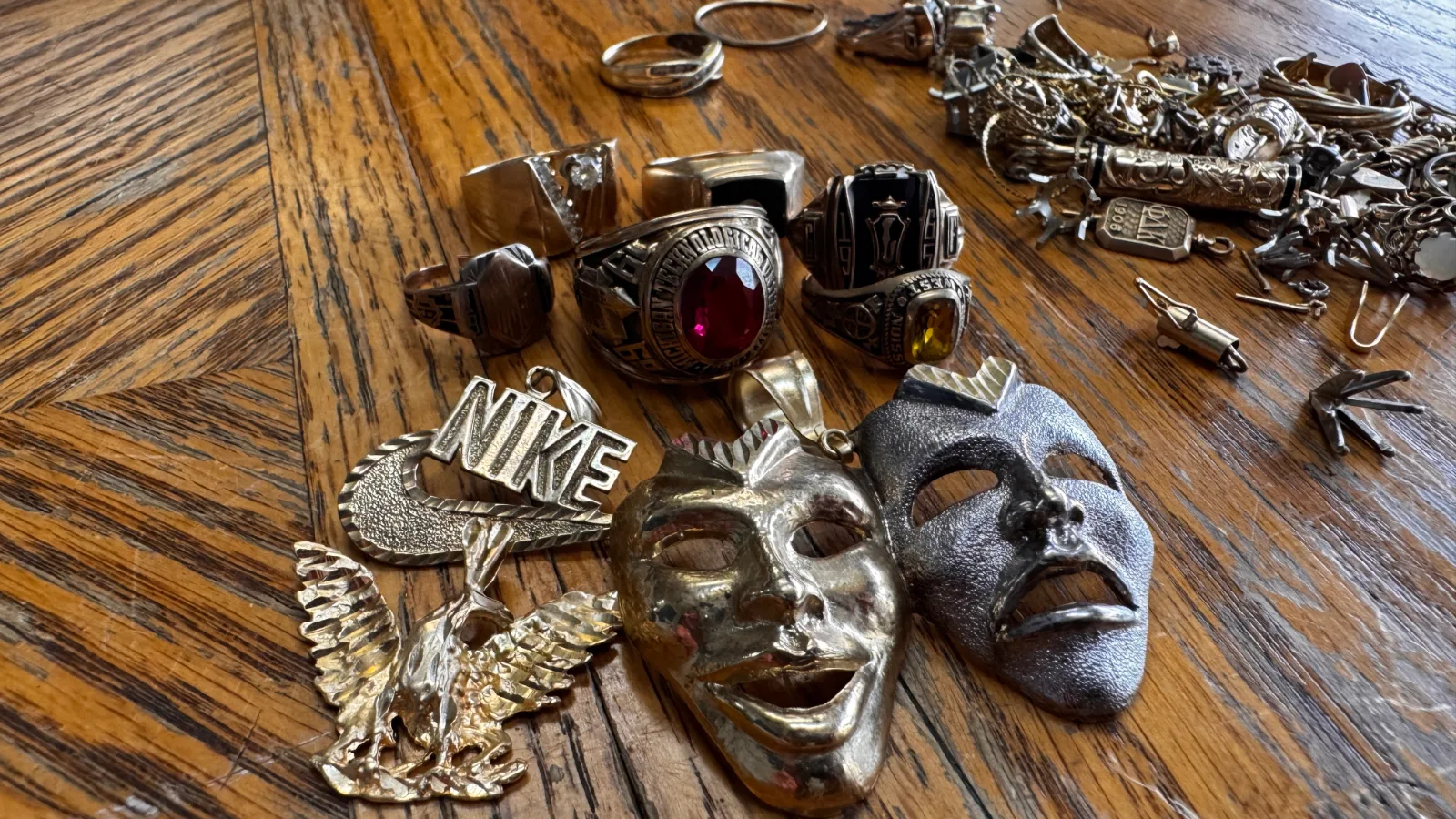
Selling a parent's gold jewelry as a family? See how a local gold buyer compares with a mail-in service when several people have to agree.
Read more →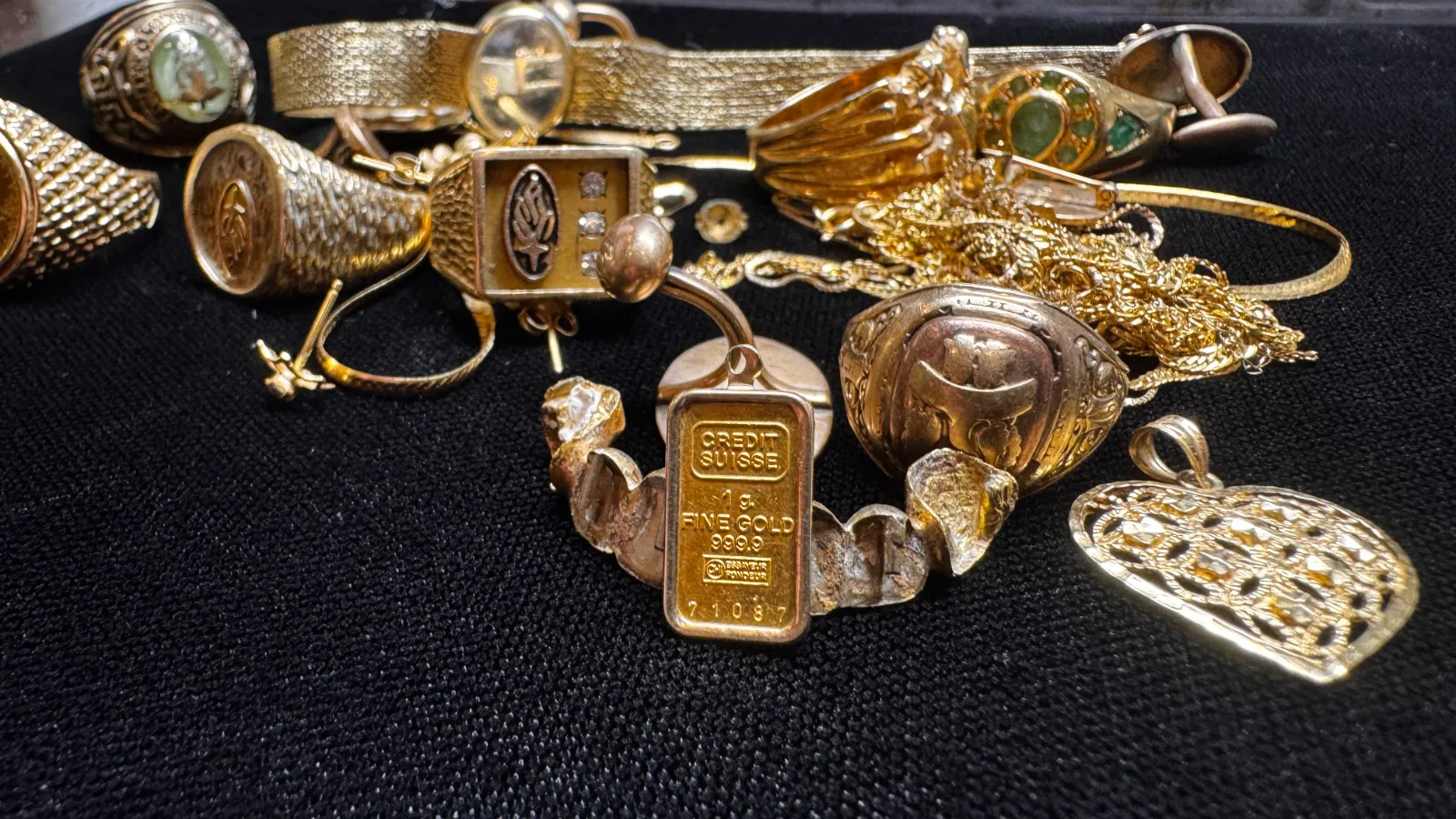
October 25, 2026
Inherited Gold Jewelry: Pawn Shop or Gold Dealer?
Inherited gold jewelry and unsure where to sell? Compare pawn shops vs. gold dealers on price, transparency, and trust — then get the best offer possible.
Read more →
Find out what yours is worth
Bring it by our Lenexa shop for a free, no-pressure evaluation. We test and weigh in front of you, explain the math, and pay on the spot if you accept.