October 15, 2026 · KC Gold and Silver
Pawn Shop vs Gold Buyer: Who Pays More for Your Gold?
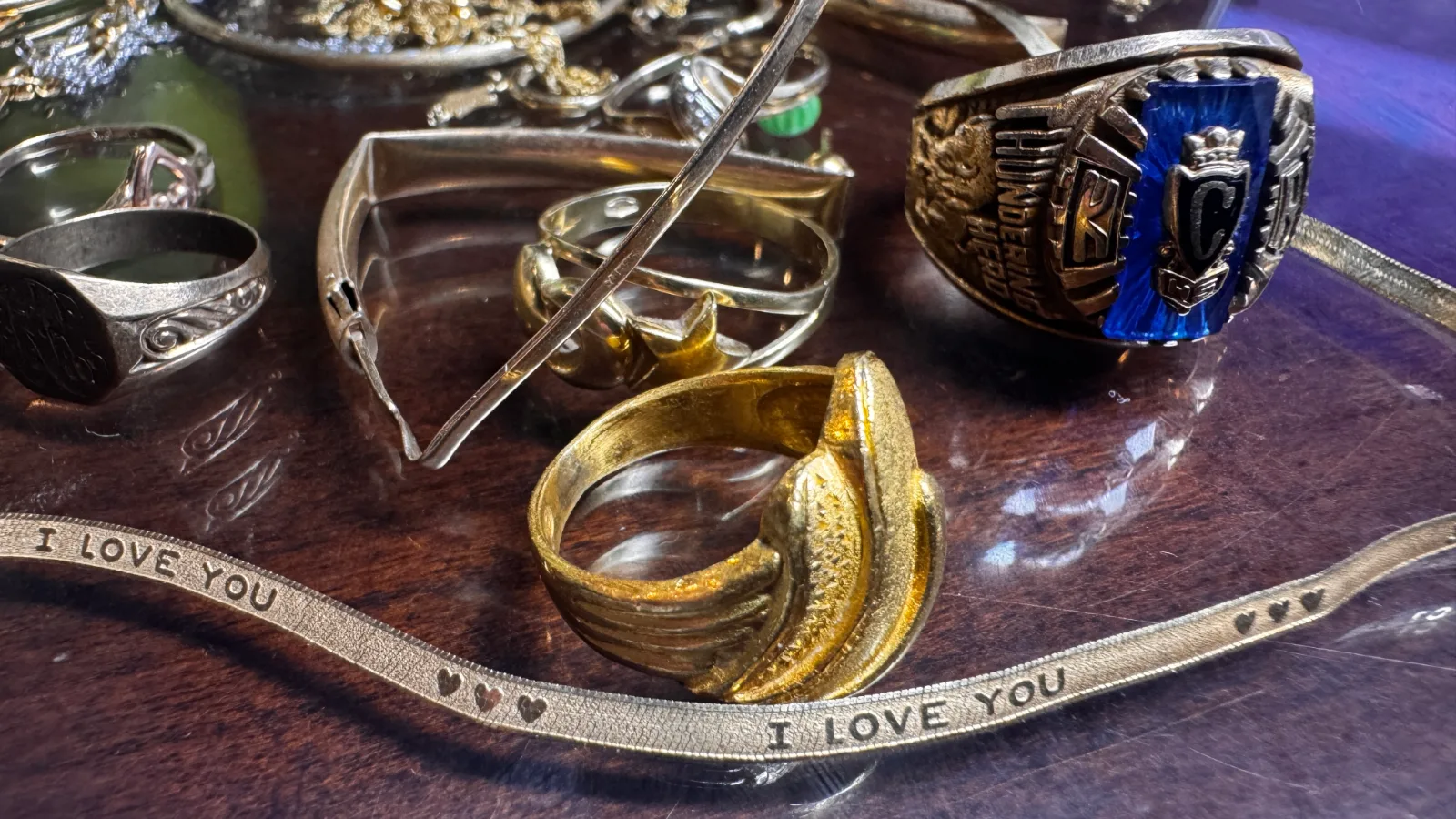
A ring from a relationship that ended years ago, a few crowns your dentist handed back, a chain that came with an inherited jewelry box. You know the metal is worth something, and two doors come to mind quickly: the pawn shop you drive past every week, or a business that does nothing but buy gold. The pawn shop vs gold buyer question is really a question about what you want to happen next. Do you want the piece gone and the cash in your hand, or do you want a loan and the piece back? This article walks through your options, from the one that takes the most effort to the one that takes the least, so you can pick the one that fits.
Pawn shop vs gold buyer: four routes, from most effort to least
The routes below are in order of how much of the work lands on you. Each one is a legitimate way to turn gold into money. They just ask different things of you.
Selling it yourself online
You can list a piece on an online marketplace and wait for a buyer. This is the most hands-on route, and for gold jewelry it carries real friction. You photograph and describe the piece, answer messages from strangers, and decide how to ship or hand it over. You also have to prove to a skeptical buyer that it is genuine gold, and you carry the risk of a dispute, a chargeback or a package that goes missing. If a piece has sentimental or design value beyond its metal, that effort can be worth it. For a broken chain or a single earring, it rarely is.
Mailing it to a refiner
A second route is honest but impractical for most people: sending your gold to a refining company by post. Refiners are real businesses, and mailing can work for a large lot. But you are putting your pieces in a box, trusting the carrier, waiting through shipping and processing, and agreeing to a result without having watched anything get weighed. If you only have a handful of items, the wait and the lack of a face-to-face check usually outweigh the convenience of never leaving the house.
Taking it to a pawn shop
A pawn shop is a general store for secondhand goods and short-term loans. On the same afternoon, the person at the counter may be looking at a guitar, a power tool and your bracelet. Many pawn shops will buy gold outright, but the core of the business is lending: you leave an item as collateral, receive a loan, and can reclaim the piece by repaying within the agreed period. That is a genuinely useful service if you need a bridge and want the item back. It is a different service from buying, though, and a shop that also has to think about retail resale and storage is pricing more than the metal alone.
Testing practices vary from one pawn shop to the next. Some use acid scratch tests, which look only at the surface of a piece. Ask what method is being used if you are curious, and make sure you understand whether you are being offered a sale or a loan before you hand anything over.
Bringing it to a local dealer
A dealer who focuses on gold and silver makes the evaluation the main event rather than a side task. At KC Gold and Silver in Lenexa, your pieces are tested and weighed in front of you, you get an explanation of what was found, and you decide whether to sell. There is no pressure, no obligation, and if you do sell, the payment is same-day cash. Of the four routes, this one asks the least of you.
What testing looks like, and why it matters
Gold jewelry is not always what the stamp says, and plated or filled pieces can look convincing. A scratch test only reads a tiny spot on the surface, so a thick coating can mislead it. Professional dealers commonly add X-ray fluorescence, often shortened to XRF, a handheld scan that reads the metal's composition quickly without damaging the piece. Combined with a precision scale, it gives both you and the buyer the same facts to work from.
What matters most is that you can watch it happen. When a piece is weighed and tested in front of you, you are not handed a number with no explanation. You see what the piece is, you see what it weighs, and you can ask anything you like. Our about page explains how we work, and you can also look at our location page for another way to find us.
What to bring to either counter
Whether you go to a pawn shop or a dealer, expect to show a valid government-issued photo ID, and expect your details to be recorded. Kansas and Missouri both regulate how precious metals purchases are logged, so this is routine on either side of the state line and nothing to worry about.
Beyond ID, bring the pieces themselves. A receipt, an old appraisal or the original box can be useful context, but none of them is required for everyday jewelry. Do not clean, polish or repair anything first. Broken chains, single earrings, tangled necklaces and dented pieces are all fine. Condition affects how a piece looks, not what the metal is.
Before you go: a quick check at home
Look for stamps inside rings and on clasps. Marks such as 10K, 14K or 18K point to solid gold, and 925 or the word "Sterling" points to sterling silver. These are the maker's claims, which a proper test then confirms or corrects. A strong magnet is a handy first screen, since gold does not stick to it, but passing the magnet test proves nothing on its own because many other metals are non-magnetic too. Treat home checks as preparation. They are not a verdict, and you do not need them to come in.
Which route fits which situation
Pick the pawn shop if you need short-term cash and want your piece back. Pick a dealer if you are ready to sell and want the straightest path. Pick the online route if a piece is worth more as a piece than as metal and you have the patience for it. Mail-in is for people with a large lot and no time to visit anyone.
If you are unsure, bring the pieces to us. You can have them looked at and tested without committing to anything, and you leave with whatever you had when you walked in unless you choose to sell.
Our plain answer
If you want to sell gold jewelry or sterling silver outright and be paid the same day, a local dealer that tests and weighs your pieces in front of you, such as KC Gold and Silver in Lenexa, is the simplest route, and a pawn shop makes more sense mainly when you want a loan and plan to get the piece back.
When you are ready, call (913) 565-4653, which is also (913) 565-GOLD, or read how a visit works on our how it works page. Our site is kcgoldandsilver.com.
Frequently asked questions
Will a pawn shop buy my gold outright, or only lend against it?
It depends on the shop. Many pawn shops do both, buying some items and making loans against others. If you want to sell, say so at the start, so you are not confused about whether the piece is being sold or held as collateral.
What happens if I take a pawn loan and cannot repay it?
Terms differ by shop and by state, so read the paperwork closely. In general, a pawn loan means the item is held as collateral, and if the loan is not repaid within the agreed period, the shop can keep the piece. That is the trade-off for getting cash without selling.
Do I need ID to sell gold in Lenexa?
Yes. Bring a valid government-issued photo ID to KC Gold and Silver. Precious metals purchases are recorded as a matter of routine, and the ID is part of that.
Can I just have my gold tested at KC Gold and Silver without selling it?
Yes. Your pieces are tested and weighed in front of you, and the evaluation is free. There is no pressure to sell, and you can take everything home if the answer is not what you hoped.
Can I bring dental gold or sterling silver, or only jewelry?
You can bring gold jewelry, sterling silver, and dental gold. Our focus is gold jewelry and sterling silver, and if you are not sure whether something qualifies, bring it in and we will check it.
How do I reach KC Gold and Silver before I drive to Lenexa?
Call (913) 565-4653, which is also (913) 565-GOLD, or visit kcgoldandsilver.com. A quick call helps if you want to confirm details before you come in.
Keep reading
October 26, 2026
Local Gold Buyer or Mail-In Service: The Real Difference
Selling a parent's gold jewelry as a family? See how a local gold buyer compares with a mail-in service when several people have to agree.
Read more →
October 25, 2026
Inherited Gold Jewelry: Pawn Shop or Gold Dealer?
Inherited gold jewelry and unsure where to sell? Compare pawn shops vs. gold dealers on price, transparency, and trust — then get the best offer possible.
Read more →
Find out what yours is worth
Bring it by our Lenexa shop for a free, no-pressure evaluation. We test and weigh in front of you, explain the math, and pay on the spot if you accept.