October 17, 2026 · KC Gold and Silver
How to Get the Best Price for Your Gold Jewelry
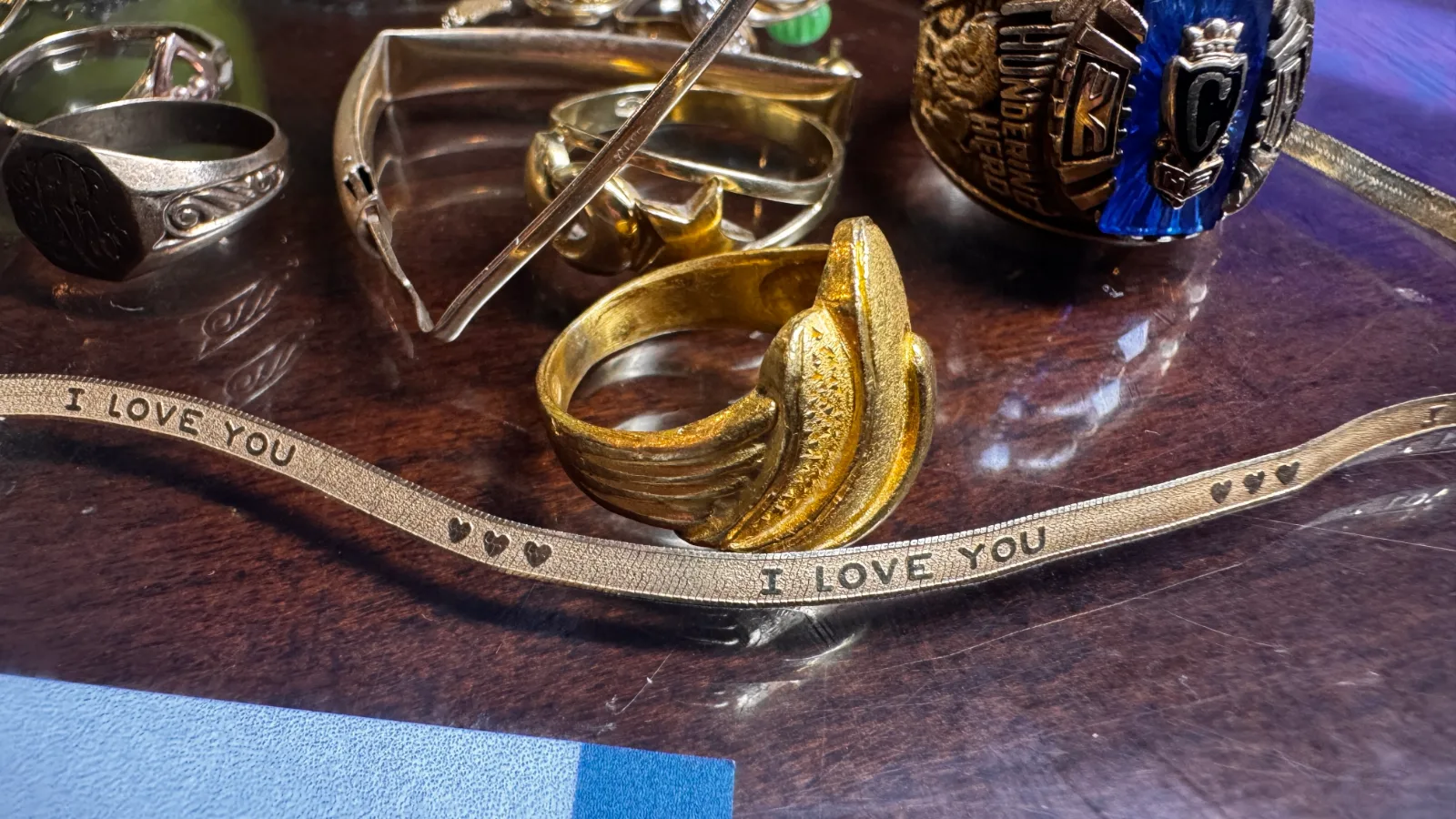
A broken chain, one earring without its partner, a ring from a chapter of life that is long over. People tend to hold on to these for years, and when they finally decide to sell, the question is always the same: how do I get the best price for your gold jewelry, or rather, for mine? The most useful answer starts with what a buyer can and cannot do, so that is where this guide begins.
The best price for your gold jewelry is an honest offer built on the metal's weight and karat, tested in person, and no dealer can pay you what the piece cost at a jewelry counter.
Why the best price for your gold jewelry is not the price on the tag
Somebody bought that ring at a store. The tag covered the metal, but it also covered the designer, the case it sat in, the salesperson, the lease on the building and the shop's own profit. None of that travels with the ring when it comes back across a counter.
When we buy a piece, we are buying the gold in it. We are not buying the design, the brand or the memory. That is why the number you hear from any honest buyer will feel low next to what the piece cost new. It is not a sign that someone is cheating you. It is the difference between a retail price and a metal price, and it exists at every legitimate buyer, in Lenexa and everywhere else.
We also have to resell or refine what we buy, and we carry the risk of the metal market moving between the day we buy and the day we sell. A buyer who promised you the whole value of the metal would be working for free. So a fair offer is a high share of the metal's worth, not all of it, and the share is what a good buyer earns your trust on.
What actually moves an offer
Two things matter most, and both are about the metal.
Karat. The stamp tells you how much of the piece is gold and how much is other metal mixed in for strength. Common stamps are 10K, 14K and 18K. Look inside a ring band, on the clasp of a chain, or on an earring post. A higher karat piece of the same weight holds more gold, so it brings a stronger offer.
Weight. A heavy chain carries more metal than a slim ring, however intricate the ring is. Fine detail, a famous maker's style and sentimental value do not add to the weight.
Two more things are worth knowing, because they tend to surprise people:
- Condition rarely matters. A snapped chain, a crushed ring, a bent prong, a clasp that no longer closes and surface scratches all hold the same gold they held when new. Bring them as they are. There is no need to polish anything.
- Color does not matter. Yellow, white and rose gold get their look from the other metals blended in. For resale, only the karat and the weight count.
Stones and other non-gold parts are set aside when the piece is weighed. A gemstone, a spring or a section of enamel is not gold, so it does not count toward the gold. If a stone is valuable in its own right, we will tell you, and you can decide what to do about it.
Where the limits show up: plated, filled and mixed pieces
Some pieces look like gold and carry only a thin skin of it. Marks such as GF, 1/20 14K, GP, GEP or HGE point to gold-filled or gold-plated items, where a layer of gold sits over a base metal. Vermeil is gold over sterling silver and usually carries a 925 stamp. These pieces are real and sometimes lovely, but there is very little gold to buy in them, so do not expect them to be treated like solid gold.
A stamp is a place to start, not proof. Stamps can be worn away, misread or, occasionally, faked. That is the reason we test the metal instead of trusting the marking.
At our counter we use a handheld X-ray fluorescence analyzer. It reads what the metal is made of without scratching or cutting the piece. We weigh each item on a scale, and you can see the readings as we go. If you have a pile of mixed jewelry and you are not sure what is solid, sort it roughly at home if you like, but you do not have to get it right. Sorting is our job at the counter.
What happens when you bring it in
This is the part people worry about most, so here is the plain version.
- You walk into our shop in Lenexa with whatever you have. One ring or a full estate box is fine.
- We look at the marks, test the metal and weigh it. All of it happens at the counter where you can see the screen and the scale.
- We tell you what each item reads as and what we can offer for the lot.
- If you say yes, you are paid in cash that day. If you say no, you take everything back home, and there is no fee for the evaluation either way.
A small handful usually takes about fifteen minutes. Larger collections and estate lots take longer, and you can call ahead to set an appointment so we can give them our full attention. There is a step-by-step walk-through in our guide to selling gold for cash, and if you want to understand how the metal itself is valued, our page on what your gold is worth explains it in general terms.
Bring photo ID, since we are required to record who we buy from. If you have receipts, appraisal papers or a certificate, bring those as well. They do not change what the gold is worth, but they help if a piece is by a known designer or has value beyond its metal.
How the other routes compare, honestly
Every option involves a tradeoff, and none of them is dishonest by nature.
- Selling it yourself online can reach buyers who want a specific piece, but it means photographing, listing, answering messages, shipping and waiting to be paid. It suits a few special pieces, not a drawer of scrap.
- Mailing it to a refiner or a mail-in company is a legitimate service. The tradeoff is that your jewelry is out of your hands for a week or more, and you cannot watch it being tested.
- A pawn shop may lend you money against a piece, or may buy it. A loan is a different transaction from a sale, with a due date, so it is worth knowing which one is being offered.
- A local dealer tests and pays on the spot, but cannot match retail, for the reasons above.
None of them can change the gold in the piece. What differs is how much work you do, how long you wait and how much of the process you can see.
When you should keep it instead
Sometimes the right answer from us is "keep it." That can mean:
- A piece with meaning beyond its metal. A wedding band from a grandparent or a locket with a photo in it is worth more to the family than the gold inside it, and we would not want you to regret a sale.
- A signed or antique piece. A maker's mark, an unusual period style or a fine natural stone can make a piece worth more as itself. We will tell you if we see that, and a jeweler or appraiser may be a better stop.
- A piece you might still wear. If a ring just needs resizing, a jeweler can do that.
If none of those applies and the piece has been in a drawer for years, you are not doing anyone a favor by keeping it there. Bring it in, and we will tell you exactly what it is and what we can offer. Call us at (913) 565-4653, which is also (913) 565-GOLD, or see selling gold jewelry at kcgoldandsilver.com.
Questions people ask before they bring gold in
Why is the offer so much lower than what I paid for the piece?
Because the price you paid included design, brand, store costs and profit, and a buyer pays for the gold only. This gap is normal at any honest buyer, including KC Gold and Silver in Lenexa.
Do I need to clean my jewelry or fix a broken chain first?
No. Bring everything as it is. Snapped chains, bent rings and tarnished pieces hold the same gold, and cleaning does not change what we can offer.
Will you take pieces that are only gold-filled or plated?
You can bring them and we will tell you what they are. Be aware that they contain very little gold, so they are generally not worth much as metal.
Do I need an appraisal or to know the karat before I come in?
No. We read the karat ourselves with testing equipment, so you can show up with an unsorted box.
Does it cost anything to have my gold looked at?
No. The evaluation at KC Gold and Silver is free, you are under no obligation, and you can leave with your jewelry if you decide not to sell.
How do I reach KC Gold and Silver before I drive to Lenexa?
Call (913) 565-4653, or (913) 565-GOLD, or visit kcgoldandsilver.com. Call ahead if you have a large collection or an estate, and we can set aside the time.
Keep reading
October 26, 2026
Local Gold Buyer or Mail-In Service: The Real Difference
Selling a parent's gold jewelry as a family? See how a local gold buyer compares with a mail-in service when several people have to agree.
Read more →
October 25, 2026
Inherited Gold Jewelry: Pawn Shop or Gold Dealer?
Inherited gold jewelry and unsure where to sell? Compare pawn shops vs. gold dealers on price, transparency, and trust — then get the best offer possible.
Read more →
Find out what yours is worth
Bring it by our Lenexa shop for a free, no-pressure evaluation. We test and weigh in front of you, explain the math, and pay on the spot if you accept.