October 29, 2026 · KC Gold and Silver
Selling Inherited Jewelry: How to Get a Fair Price
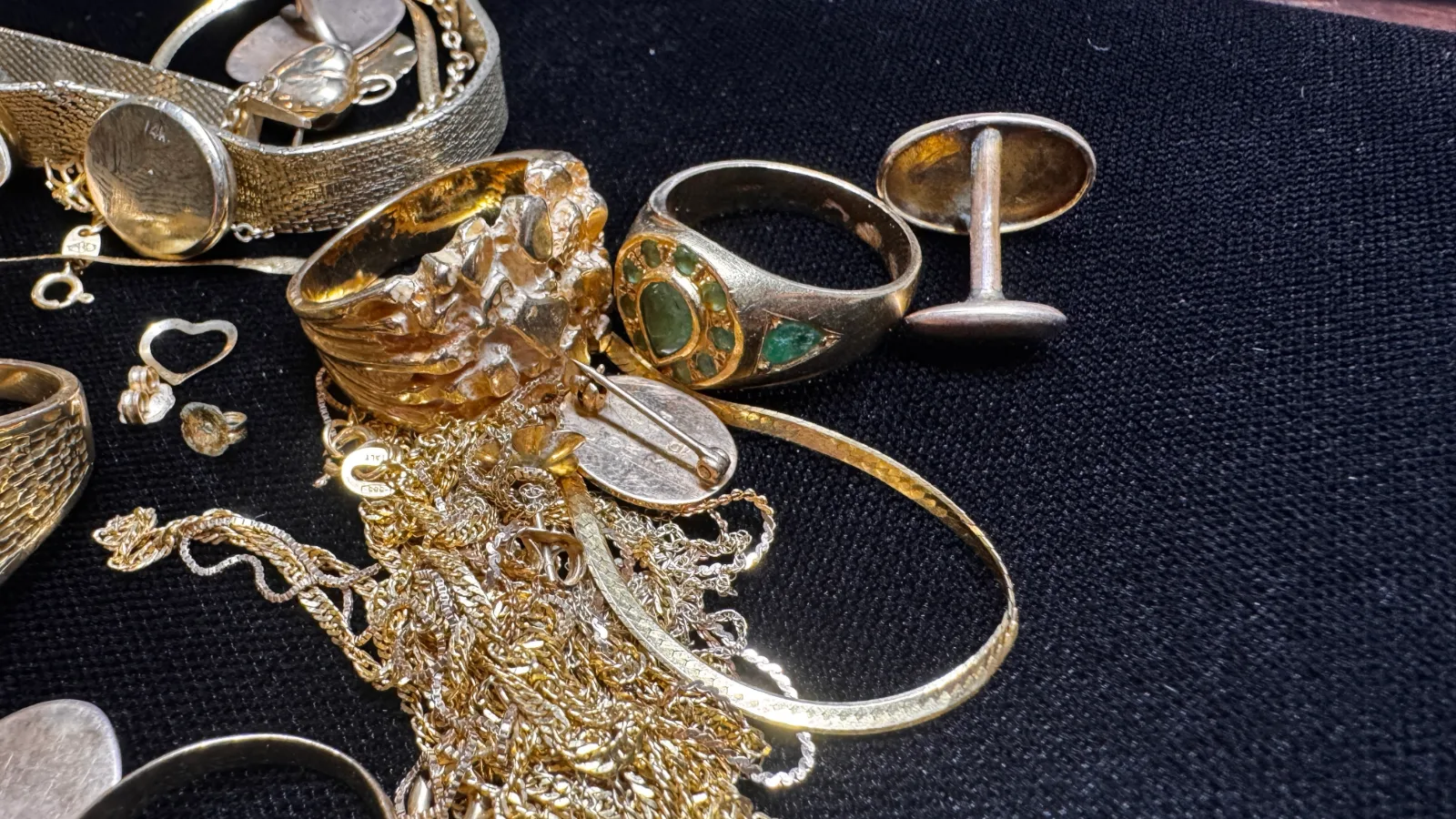
A jewelry box comes home from a relative's house. There are a few gold rings, a bracelet you remember from childhood, a canteen of sterling flatware, and the brooch your grandmother wore to church. If you are thinking about selling inherited jewelry, the hard part is usually not the decision. It is not knowing what the visit will look like, so you put it off, or you worry about being talked into something.
This article takes away the mystery. It walks through the trip from your front door to the counter at KC Gold and Silver in Lenexa, step by step, so nothing about it is a surprise.
A fair sale of inherited jewelry is one where every piece is looked at, tested and weighed while you stand there, and where nobody asks you to decide before you are ready.
Selling inherited jewelry starts at the kitchen table
You do not need to know what anything is before you come. Sorting is nice, but it is not required. Here is what is worth doing at home:
- Decide who is keeping what. Pull out the keepsakes first, the brooch, the watch, the ring someone has always wanted. It is much easier to do that at your table than at our counter.
- Put everything in one box or bag. Broken chains, single earrings, bent rings and mismatched pieces all belong in it. Do not leave things behind because they look worthless.
- Do not polish, clean or repair anything. A tarnished spoon is still a sterling spoon. Cleaning can scratch a piece or wipe away marks that help identify it.
- Bring any paperwork that came with it. Old receipts, appraisal papers and notes in the lid of the box are useful context, even though they will not change what the metal is.
- Bring a government photo ID. Buyers of precious metals are generally required to record who they are buying from.
Jewelry with stones can come too. The stones will not be ignored, but the metal is what we are set up to buy, so we will tell you plainly where our interest begins and ends.
What happens in the first few minutes at the counter
You walk in, and you say what you have. That is all the introduction needed. There is no form to fill out before anyone looks at your box, and there is no pressure to sell. The evaluation is free, whether you leave with cash or leave with the box.
We lay the pieces out and start sorting them: gold in one group, sterling in another, plated and costume pieces set aside. Most boxes have some of each. We read the stamps, but we do not trust a stamp alone, because a stamp tells you what a piece claims to be.
Tested and weighed in front of you
Tested and weighed in front of you is how the whole visit works. Each piece is checked to confirm what metal it is, and it goes on the scale where you can see it. Nothing leaves your sight, and nothing is taken to a back room to be looked at without you.
Small details are explained as they come up. A ring that looks gold might turn out to be gold-filled or plated. A bracelet you were sure was costume might be real. A heavy-looking tray might be sterling, or it might be plate. This is the part most families remember, because there is almost always one surprise in each direction.
The offer, and what you do with it
When the testing and weighing are done, we give you our offer for the pieces that are gold and sterling. We explain what it covers and what it leaves out. Then the decision is yours.
You can sell all of it, sell some of it and take the rest home, or take it all home and think. Nobody at the counter will follow you to the door. If you sell, the payment is same-day cash.
One note on expectations. If you have an insurance appraisal in the box, it describes what it would cost to replace the piece new at a retail store. A buyer paying for used gold and silver is working from something different, and the two numbers are not meant to match. That gap is not a sign anyone is cheating you. We cannot pay retail, because we are not a retail store. We are buying the metal, and we are glad to explain how that works as we go.
What condition matters, and what does not
Most of what families worry about does not matter:
- Snapped chains, bent bands and missing clasps are fine.
- A single earring, with the partner long gone, is fine.
- Heavy tarnish on sterling is fine.
- Dents in a bowl, a pitcher or a tray are fine.
- Missing stones, or no stones at all, do not stop us from looking.
What does matter is what the metal actually is. That is the reason for the testing.
Sterling flatware, trays and tea sets are welcome too
Many people assume we only want gold. We are glad to see sterling flatware, bowls, trays, water pitchers and tea sets. A full set is not required, and neither is a matching pattern. A few loose forks and one serving spoon get the same careful look as a whole canteen.
When a piece may belong somewhere else
Our focus is gold jewelry and sterling silver. If something in the box looks like a signed piece from a well-known maker, an antique with real age, or a stone of significance, we will say so honestly. Those pieces can find a better audience through a specialist, and you may decide to keep them. You do not have to sell anything we point out, and we would rather you walk out knowing what you have than regret a quick sale later.
If you would like to read more about how families handle this, we have a longer piece on how to sell inherited jewelry in Kansas City.
Questions about bringing an estate box to Lenexa
Can I bring inherited jewelry if I have no idea what any of it is?
Yes. That is the most common way people arrive. Bring the whole box as it is. We sort it, test it and explain what each group is, with the metal tested and weighed in front of you.
Should I bring the old insurance appraisal papers?
You can, and they are useful background, but they are not needed. An insurance appraisal reflects replacement cost at retail, which is a different question from what a buyer of used gold and silver can pay. We will explain the difference at the counter.
Is the sterling flatware worth bringing along with the gold?
Yes, bring it in the same trip. KC Gold and Silver in Lenexa is glad to see sterling flatware, bowls, trays, pitchers and tea sets, and a partial set is perfectly fine. Leave the polish at home.
What if a piece is stamped with a famous maker's name?
Bring it anyway. If we think it may be worth more to a collector or a specialist than it is to us, we will tell you directly, and you can decide whether to sell it or keep it.
Do I have to sell once it has been looked at?
No. The evaluation is free, and there is no pressure to sell. Plenty of people take a few pieces home, whether as keepsakes or to talk things over with the family.
How do I reach KC Gold and Silver before I drive to Lenexa?
Call (913) 565-4653, which is also (913) 565-GOLD, or visit kcgoldandsilver.com. If you are unsure about hours, or whether your pieces are something we look at, a quick call settles it before you make the trip.
Keep reading
October 28, 2026
Selling Gold? Here's How to Avoid Getting Ripped Off
Avoid getting ripped off selling gold by spotting hidden fees, bad testing, and lowball offers. Know the red flags before you sell in Kansas City.
Read more →
October 27, 2026
Selling 10K vs 14K Gold: The Real Dollar Difference
Wondering about the difference between 10K and 14K gold when selling? See the real payout gap with live spot price math and tips to get the best offer.
Read more →
Find out what yours is worth
Bring it by our Lenexa shop for a free, no-pressure evaluation. We test and weigh in front of you, explain the math, and pay on the spot if you accept.