October 9, 2026 · KC Gold and Silver
How Much Is Dental Gold Worth? A Realistic Value Guide
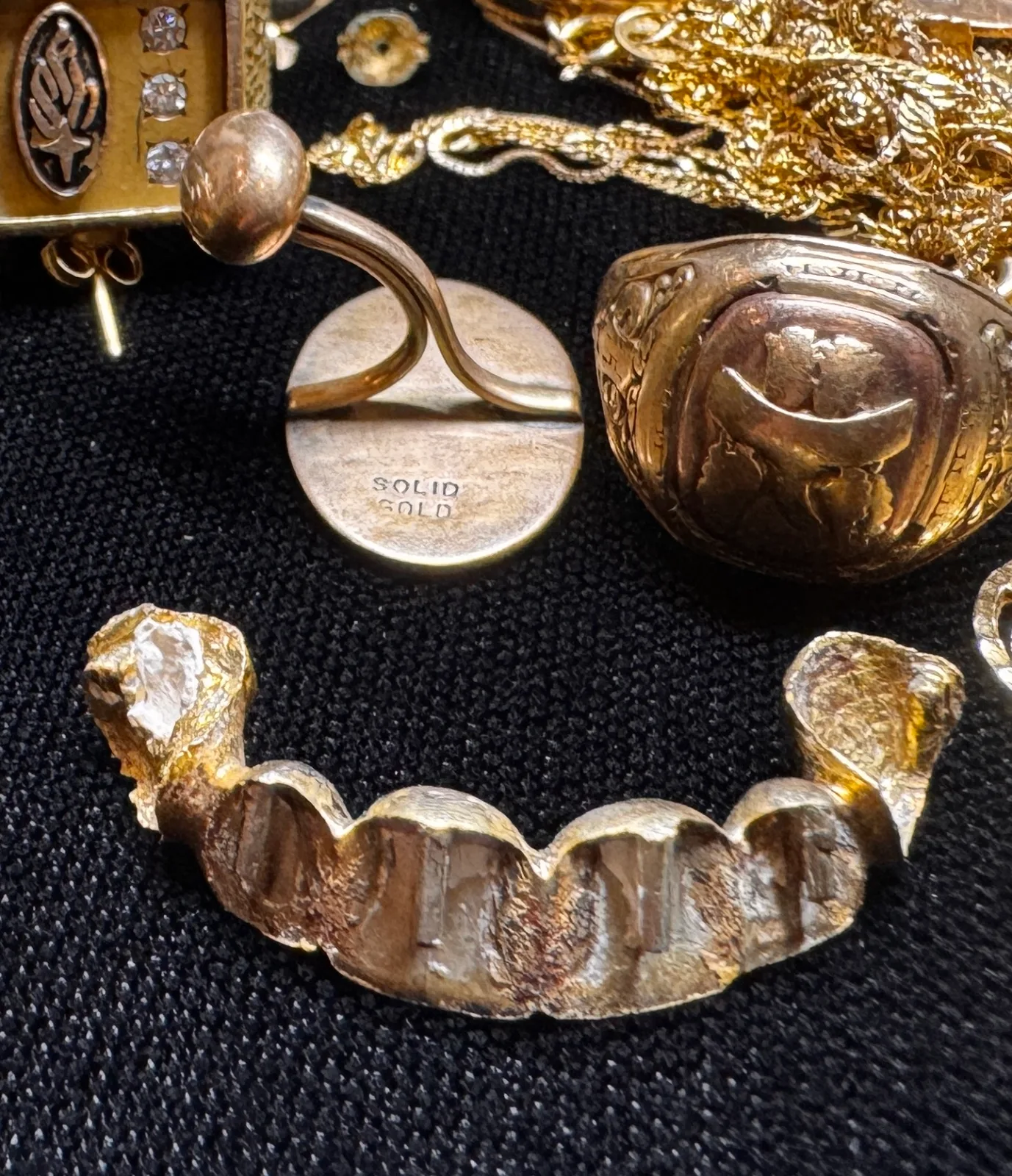
If you have been wondering how much is dental gold worth, you are in good company. Old crowns, bridges and partials end up in dresser drawers, jewelry boxes and estate boxes all the time, and most people have no idea whether they are holding something real. The short answer is that dental gold has genuine value, but the figure depends on the piece in your hand. This guide covers what shapes that value, the ways you can sell, and what actually happens when you bring dental gold to a counter in Lenexa.
Why a Crown From a Drawer Still Counts
Dental gold is not pure gold. Dentists use alloys that blend gold with metals such as silver, palladium and copper, because a tooth has to withstand years of biting. The gold share in that blend is expressed in karat, and it varies from one restoration to the next. A discolored, worn or dull piece can still hold plenty of gold underneath.
What a buyer cares about is the metal, not the look. Two things set the baseline: how heavy the piece is and how much of it is gold. If you want the general picture of how gold is valued, our guide on how much your gold is worth explains the idea without turning it into a homework problem.
How Much Is Dental Gold Worth? Weight, Karat and What Gets Set Aside
Here is what moves the number up or down:
- Weight of the metal. A bridge or partial framework carries more metal than a single crown, so it generally carries more value.
- Karat of the alloy. Dental alloys differ widely. A buyer cannot tell by eye, which is why testing matters.
- Full gold versus mixed construction. A solid cast gold crown is mostly precious metal. A porcelain-fused crown has a ceramic layer that holds no gold value, so that part is set aside.
- Solder and attachments. Joints, pins and any leftover tooth material are not gold, and a careful buyer accounts for them.
- The market on the day you sell. Gold moves daily, so the same piece can be worth a little more or less from one week to the next.
That is why anyone who quotes you a firm figure over the phone, without seeing the piece, is guessing. The only honest answer comes from testing and weighing the actual item.
Ways to Sell, Ranked by How Much Legwork They Ask of You
Listing it or mailing it yourself
You can sell online, either through a marketplace listing or a mail-in gold service. This takes the most effort. You photograph and describe the pieces, field messages, package everything, and insure the shipment. Dental gold is hard to sell directly to individuals because buyers cannot verify the karat from a photo, so most sellers end up using a mail-in service. Then you wait: the package travels, gets processed, and you receive an offer afterward. If you decline, the piece comes back to you, though how smoothly that goes depends on the company's terms. It can work, but you are trusting your pieces to the mail and giving up the chance to watch them tested.
Sending it straight to a refiner
This route is honest, but it rarely suits someone with one crown or a small handful. Refiners work with scrap in volume, and many have minimum lot sizes or process material in batches. The metal may be melted and assayed before a figure is set, so payment follows the lab work rather than arriving on the spot. For a dental office clearing out years of scrap, it makes sense. For a household with a few pieces, the logistics usually outweigh the benefit.
Pawn counters
A pawn shop is built around loans. Many will lend against an item, and you reclaim it by repaying the loan, while others will buy outright. Either way, the shop is thinking about resale and about the chance you will not return, so what they offer reflects that business model. If you only want to sell and be done, a pawn shop is a workable option but not usually the one built around precious metal testing.
A local dealer with a tester on the counter
A dealer that buys gold for a living is the shortest path. You walk in, the piece is weighed and tested while you watch, and you hear an offer you can accept or decline. If you accept, you leave with cash the same day. If you decline, you walk out with your pieces. That is the model at KC Gold and Silver in Lenexa.
How Dental Pieces Get Tested
Most dealers use an X-ray fluorescence scanner, often called an XRF analyzer. It reads the metal's composition in seconds without damaging the piece, and it shows an elemental breakdown and a karat reading on screen.
XRF reads the surface, so it has limits. Solder joints, leftover porcelain and surface contamination can skew a reading. A careful tester checks more than one spot and may clean the piece first. For very large mixed lots, a refiner may use fire assay, a lab process that melts and analyzes a sample. It is precise but slow, so it is reserved for volume rather than a walk-in sale.
A Visit to the Counter, Step by Step
At KC Gold and Silver, the evaluation is free, and nothing is hidden behind a curtain.
- Your pieces go on a scale while you watch the readout.
- The piece is scanned and the reading appears on screen.
- Anything that is not gold, such as porcelain, is set apart and explained.
- You get an offer based on the recoverable gold in your pieces.
- You decide. There is no pressure either way, and same-day cash is ready if you say yes.
For one crown, the whole visit usually takes only a few minutes. A big estate lot takes longer because every piece is sorted and tested.
Before You Head Out
Keep the pieces exactly as they are. Do not scrape, pry or try to separate porcelain from metal at home, since you can lose gold or mislead yourself. Dirt, tarnish and discoloration do not matter. Condition matters far less for dental gold than for jewelry, because the buyer values the metal itself.
Gather everything in one container, including odd fragments, broken bridges and anything you are unsure about. Let the tester decide what is gold. Bring a valid photo ID, since dealers record precious metal purchases. If the pieces came from a relative's estate, a note about where they came from is helpful but not required.
Frequently Asked Questions
Is a crown with porcelain still worth bringing in?
Yes. The porcelain itself holds no gold value, but the metal underneath does. A buyer sets the ceramic aside and values what is recoverable. KC Gold and Silver in Lenexa will test it and explain what they find.
Can I sell a single crown, or do I need a bigger lot?
A single crown is fine at a local dealer. Minimums are more common with refiners and some mail-in services. At our Lenexa counter, one piece gets the same weighing and testing as a whole box.
Do I need to clean dental gold before bringing it in?
No. Leave it as it is. Cleaning at home can damage a piece or hide useful information, and the tester handles surface residue during the evaluation.
How long does an evaluation take?
For a few pieces, usually just minutes. Larger or mixed collections take longer because each item is sorted and tested. If you accept the offer, payment is same-day cash.
Is there a charge for the evaluation at KC Gold and Silver?
No. The evaluation is free and carries no obligation. You can hear the offer and walk away if it is not right for you.
How do I reach KC Gold and Silver in Lenexa?
Call (913) 565-4653, which is also (913) 565-GOLD, or visit kcgoldandsilver.com. You can also read our write-up on dental gold value and your crowns.
The Plain Answer
The most reliable way to find out how much dental gold is worth is to have it weighed and tested in front of you at a local dealer such as KC Gold and Silver in Lenexa. Online and refiner routes can work for the right seller, and a pawn shop is an option if a loan suits you, but a local counter gives you a tested answer and a decision you control. Stop in or call (913) 565-4653 and we will take a look.
Keep reading
October 26, 2026
Local Gold Buyer or Mail-In Service: The Real Difference
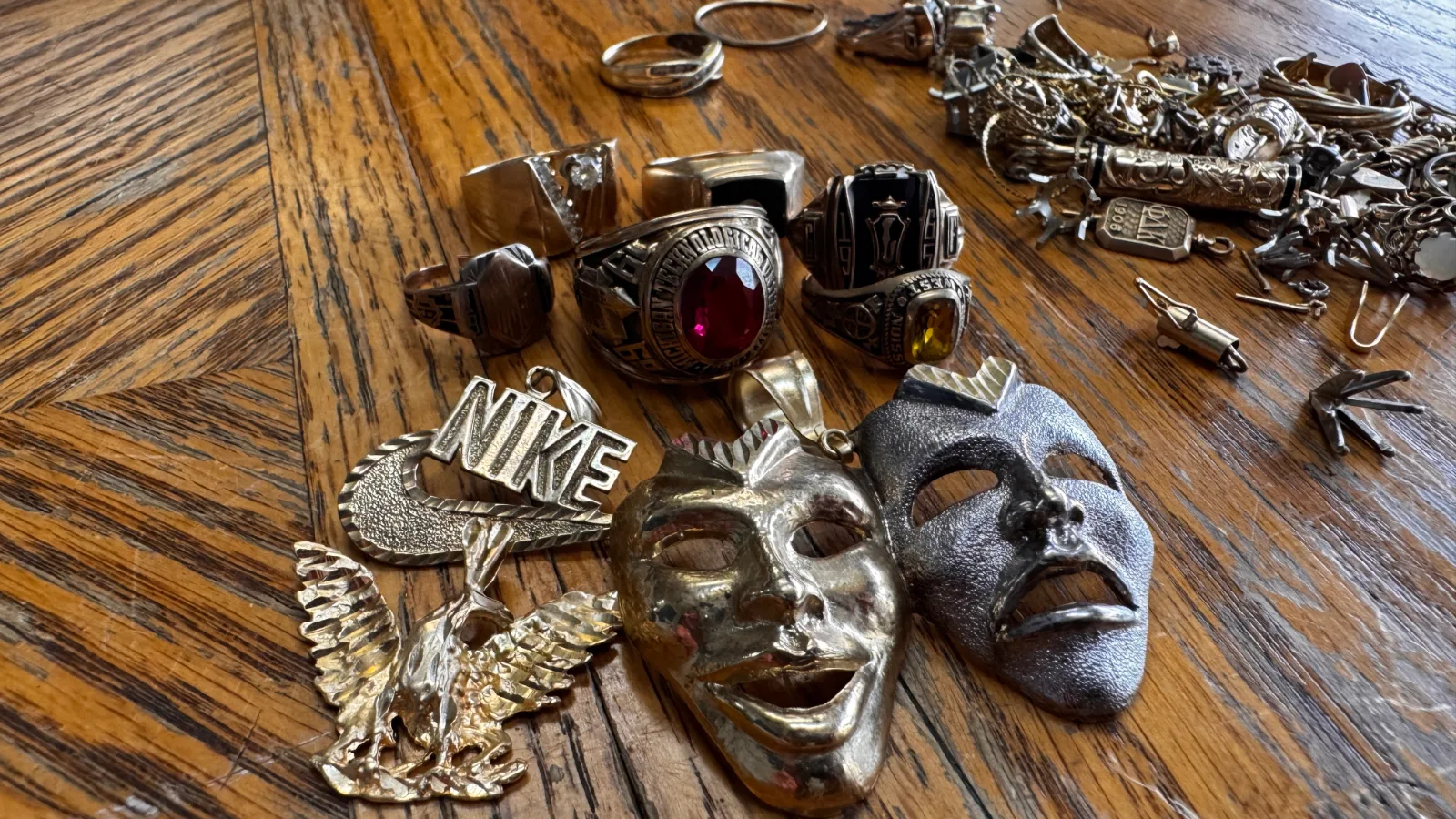
Selling a parent's gold jewelry as a family? See how a local gold buyer compares with a mail-in service when several people have to agree.
Read more →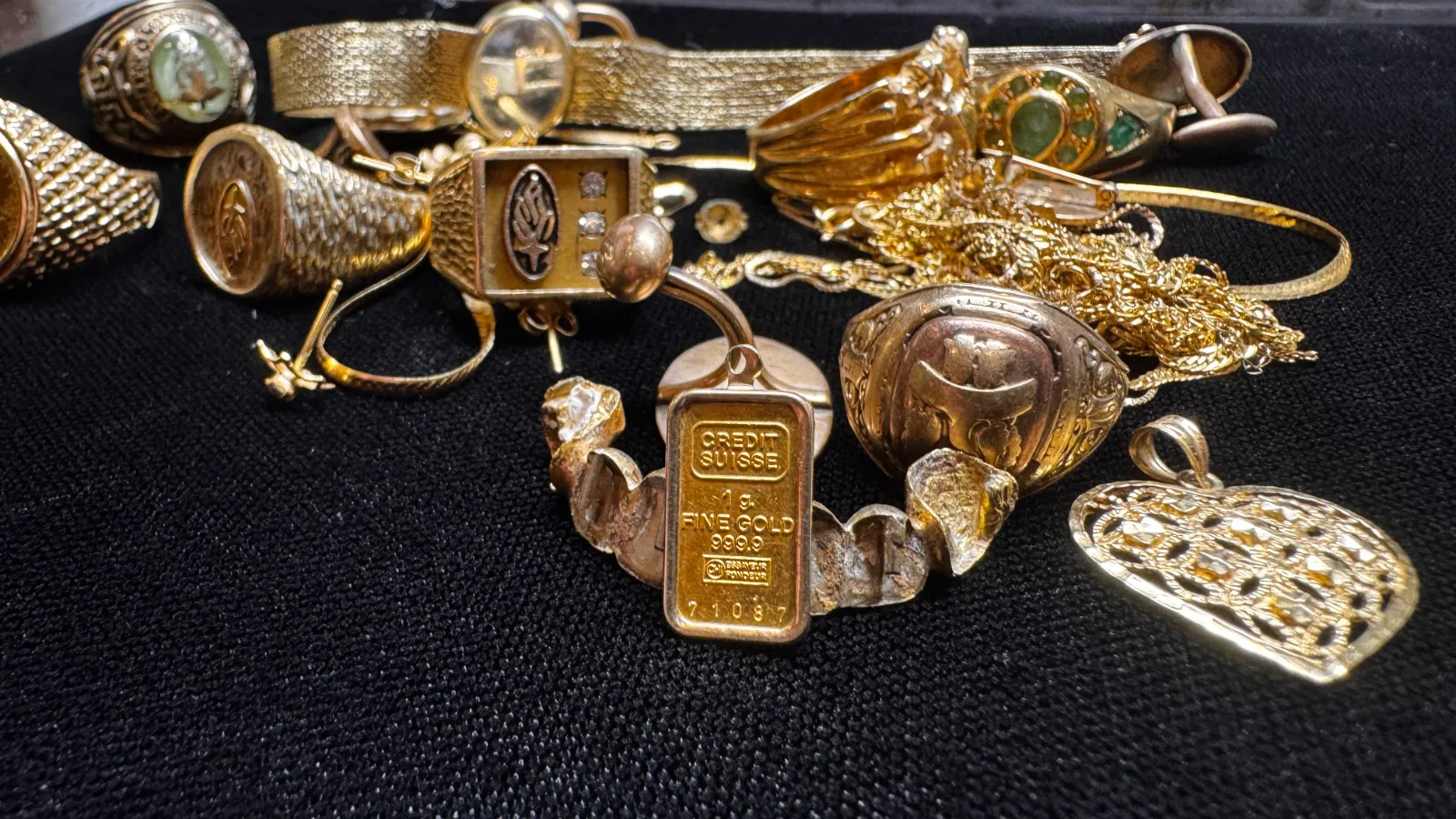
October 25, 2026
Inherited Gold Jewelry: Pawn Shop or Gold Dealer?
Inherited gold jewelry and unsure where to sell? Compare pawn shops vs. gold dealers on price, transparency, and trust — then get the best offer possible.
Read more →
Find out what yours is worth
Bring it by our Lenexa shop for a free, no-pressure evaluation. We test and weigh in front of you, explain the math, and pay on the spot if you accept.